What decentralized KYC vaults actually are
Decentralized KYC vaults are user-controlled containers for verifiable credentials. They solve a fundamental problem in Web3 compliance: the risk of centralized honeypots. In traditional systems, you submit your passport and face scan to a platform, which stores that personally identifiable information (PII) in a database. If that database is breached, your identity is compromised. A decentralized vault flips this model. You verify your identity once with a trusted provider, receive a cryptographic proof, and store it in your own wallet.
This architecture supports self-sovereign identity. You own the credential. You decide when to share it, with whom, and for how long. This is critical for privacy in an industry that values anonymity but must comply with regulations like the EU's MiCA or the US Bank Secrecy Act. By separating verification from data storage, you reduce the attack surface. There is no central server to hack. There is only your cryptographic proof, which is useless to anyone without your private key.
The technology relies on verifiable credentials issued by accredited entities. These credentials are standardized (often using W3C VC Data Model) so they can be read across different platforms. Once you have a valid credential in your vault, you can reuse it for one-click onboarding across multiple services. This eliminates the repetitive friction of uploading documents to every new platform while maintaining strict regulatory compliance. The vault acts as the single source of truth for your identity status, managed entirely by you.
How the vault infrastructure works
A decentralized KYC vault operates differently from traditional centralized databases. Instead of handing your raw documents to a company that stores them in a central server, you interact with a system built on self-sovereign identity principles. This approach shifts control back to the user, allowing you to prove your identity without exposing your underlying data.
The process follows a clear, ordered flow involving three main actors: the Verifier (who checks your ID), the User (who holds the proof), and the Service Provider (who needs to know you are compliant). Here is how the technical handshake happens.
You begin by uploading your government-issued ID to a trusted Verifier. This entity could be a recognized identity authority or a specialized KYC provider. The Verifier checks the document against official records to confirm it is genuine and that you are who you say you are. Once verified, they do not send your raw ID back to you; instead, they create a digital signature attesting to the fact that the ID is valid.
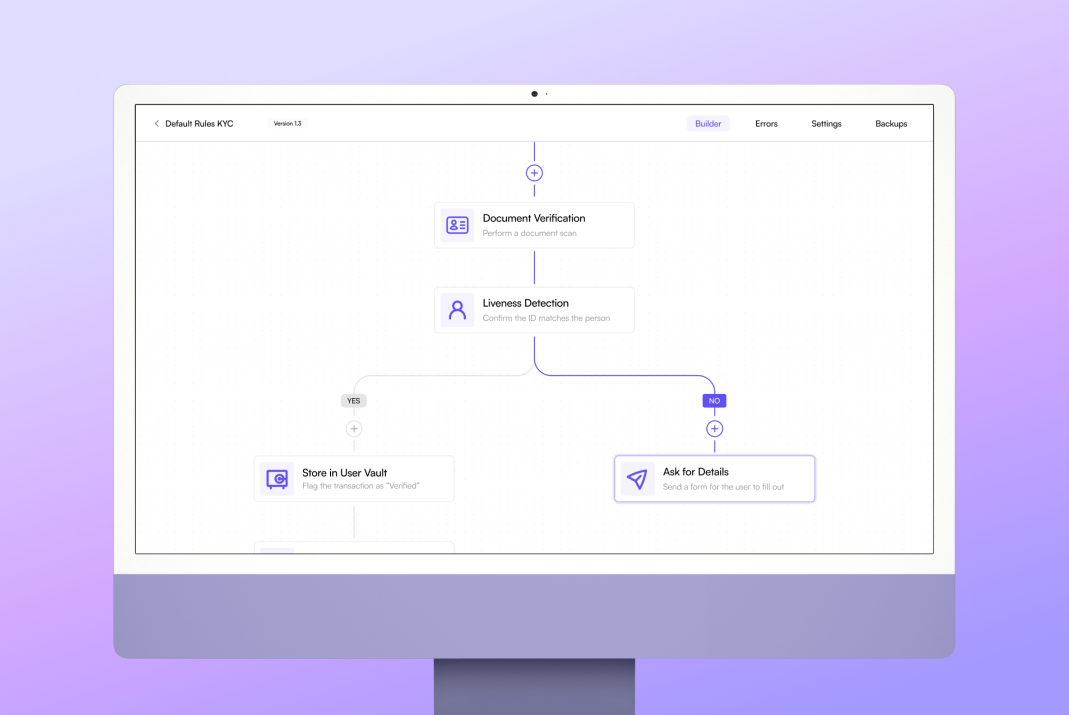
The Verifier issues a Verifiable Credential (VC) to your digital wallet. Think of this VC as a digital badge or a sealed letter. It contains specific claims—such as "Over 18" or "Resident of the EU"—but crucially, it is cryptographically signed by the Verifier. This signature proves the information is authentic without revealing the original ID document. You now hold this credential in your self-sovereign wallet, which you control completely.
Your wallet acts as a secure, personal vault for these credentials. Unlike a centralized database, no single company owns or manages this storage. You decide which credentials to keep, which to delete, and who can see them. This is the core of self-sovereign identity: you own your data, and you grant permission to access it, rather than relying on a third party to hold it for you.
When you need to access a service, such as a decentralized exchange or a DeFi protocol, you don't send your VC or your ID. Instead, you generate a zero-knowledge proof (ZKP). This cryptographic method allows you to prove a statement is true without revealing the underlying data. For example, you can prove you are over 18 without revealing your birthdate or name. The Service Provider verifies the proof against the Verifier's public key, confirming your compliance instantly.
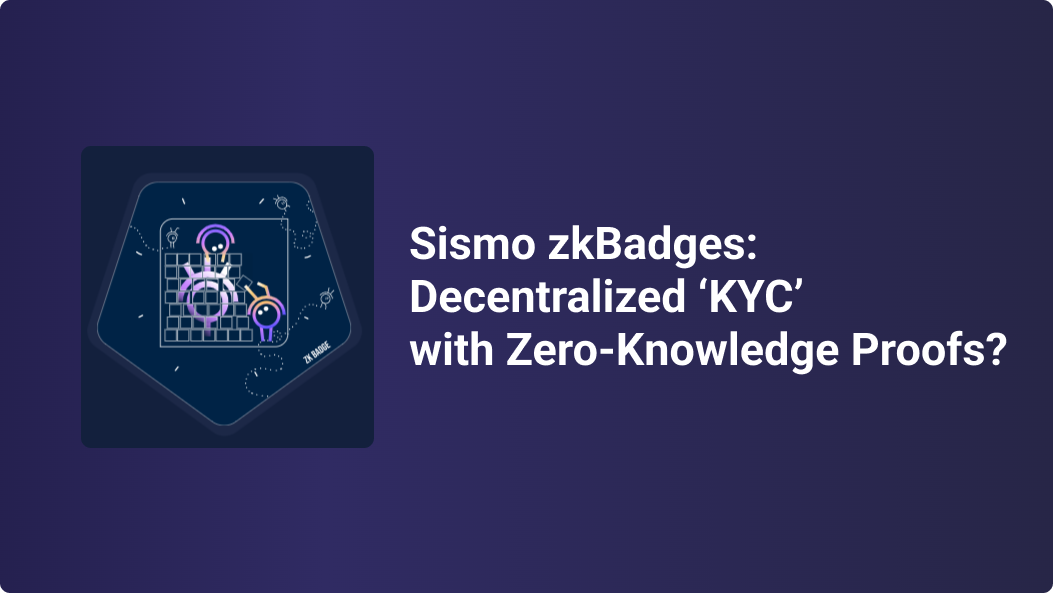
The Service Provider receives the zero-knowledge proof and validates it using public cryptographic methods. If the proof is valid, the service grants you access. The provider never sees your ID, your full name, or your exact birthdate. They only know that you meet the specific criteria required for compliance. This minimizes data exposure and reduces the risk of large-scale identity breaches, which are common in traditional KYC systems.
This flow ensures that your sensitive personal information remains private while still meeting regulatory requirements. By using verifiable credentials and zero-knowledge proofs, decentralized KYC vaults offer a more secure and user-centric alternative to traditional identity verification.
Privacy benefits over centralized systems
Centralized KYC systems create a single point of failure. When a service provider stores your identity documents and biometric data in a central database, that database becomes a high-value target for attackers. A single breach can expose millions of users' sensitive information simultaneously. Decentralized KYC vaults eliminate this risk by keeping data encrypted on your device or in a distributed network. You retain sovereignty over your verifiable credentials, sharing only what is necessary for each specific interaction.
This architecture reduces the attack surface significantly. Instead of trusting a third party to safeguard your data, you use zero-knowledge proofs to demonstrate compliance. For example, you can prove you are over 18 without revealing your birthdate. This approach aligns with self-sovereign identity principles, where the user controls their digital identity. As noted by Entrust, this model allows institutions to verify users securely without the need to store raw personal data, reducing liability and regulatory exposure.
User control extends to access management. In a centralized system, revoking consent often means navigating complex customer service channels or waiting for manual deletion. With decentralized vaults, you can revoke access to your credentials instantly. If a platform is compromised or you no longer wish to share data, you can withdraw permission without needing to re-verify your identity elsewhere. This flexibility ensures that your privacy preferences remain enforceable across the web3 ecosystem.
| Feature | Centralized KYC | Decentralized KYC Vaults |
|---|---|---|
| Data Storage | Centralized server | User-controlled / Distributed |
| Breach Risk | High (single point of failure) | Low (no central repository) |
| User Control | Limited (provider-managed) | Full (user-managed) |
| Revocation | Slow / Manual | Instant / Self-service |
| Verification | Repeated for each platform | Reusable via verifiable credentials |
The shift from centralized to decentralized identity verification represents a fundamental change in how compliance is handled. By moving data ownership back to the user, we reduce the incentive for mass data breaches. This structure not only enhances security but also streamlines the user experience, allowing for seamless onboarding across multiple platforms without repetitive document uploads.
Navigating the Compliance Maze
Decentralized KYC vaults operate in a high-stakes environment where regulatory pressure meets technical idealism. The core challenge is satisfying Anti-Money Laundering (AML) and Know Your Customer (KYC) laws without surrendering the privacy and autonomy that define Web3. Traditional centralized exchanges solve this by holding all user data, but vaults must achieve compliance through cryptographic proof rather than data hoarding.
The Verifier’s Role
In this ecosystem, trust shifts from the platform to the verifier. These are authorized entities—often regulated institutions—that perform the initial identity checks. They issue verifiable credentials to the user’s wallet. Crucially, the vault itself does not store the user’s passport or selfie. Instead, it stores a cryptographic token proving that a trusted party has already validated the user’s identity. This separation ensures that even if the vault is compromised, the sensitive personal data remains with the verifier, not the smart contract.
Zero-Knowledge Proofs as the Bridge
The technology enabling this balance is the zero-knowledge proof (ZKP). ZKPs allow a user to prove they meet specific compliance criteria (e.g., "is over 18," "is not a sanctioned entity") without revealing the underlying data. This supports the principle of self-sovereign identity, where the user controls their own data and only shares what is necessary for the transaction. By using ZKPs, decentralized KYC vaults can interact with regulated financial systems while maintaining the pseudonymous nature of the blockchain.
Many jurisdictions require the verifier to retain audit logs, even if the user holds the vault.
Regulatory Fit and Institutional Adoption
For institutional DeFi, this structure is becoming a prerequisite. As noted by industry analyses, institutional-grade vaults now require KYC whitelisting and transparent governance to attract capital (Everstake, 2024). This shift signals a move away from the "wild west" era of DeFi toward a model that can coexist with traditional finance. The goal is not to eliminate decentralization, but to make it compliant. By embedding these checks into the vault’s architecture, projects can offer regulated access to on-chain assets without becoming centralized custodians themselves.
This approach addresses the primary concern of regulators: accountability. While the transaction is on-chain, the identity behind it is verified and logged by a responsible party. This creates a hybrid model where decentralization handles the execution, and compliance handles the verification. As regulations like the EU’s MiCA framework take effect, this modular approach to KYC will likely become the standard for any vault seeking serious institutional participation.
Decentralized KYC Vaults: Top tools and infrastructure providers
The infrastructure for decentralized KYC is maturing rapidly, with several platforms offering distinct approaches to verifiable credentials and zero-knowledge proofs. These tools allow users to maintain self-sovereign identity while satisfying regulatory requirements.
Dock
Dock provides a decentralized identity network that enables the issuance and verification of credentials without a central authority. Their platform focuses on interoperability, allowing different ecosystems to trust credentials issued across the network. Dock’s approach ensures that data remains portable and user-controlled, reducing the friction of repeated identity checks. Learn more about their decentralized identity framework on their official site.
Zyphe
Zyphe specializes in privacy-first identity verification, allowing users to verify their identity once and reuse those credentials across multiple platforms. This reduces the burden on users and prevents redundant data storage by individual services. Their solution leverages zero-knowledge proofs to confirm attributes like age or residency without exposing underlying personal data.
Shyft
Shyft Network offers a decentralized identity layer specifically designed for enterprise and institutional use. It provides a robust framework for managing digital identities and credentials in a compliant manner. Shyft’s infrastructure is built to handle the scale and security requirements of traditional financial institutions transitioning to Web3.

As an Amazon Associate, we may earn from qualifying purchases.
Implementing a decentralized KYC strategy
Integrating a decentralized KYC vault requires shifting from centralized data hoarding to a self-sovereign identity model. Instead of storing raw personally identifiable information (PII), your platform verifies verifiable credentials (VCs) issued by trusted authorities. This approach minimizes liability and aligns with privacy-first compliance standards.
Identify a trusted identity provider that issues W3C-compliant verifiable credentials. Ensure they support zero-knowledge proofs (ZKPs) so users can prove attributes like age or residency without revealing underlying data. Look for issuers that adhere to official regulatory guidelines for digital identity.
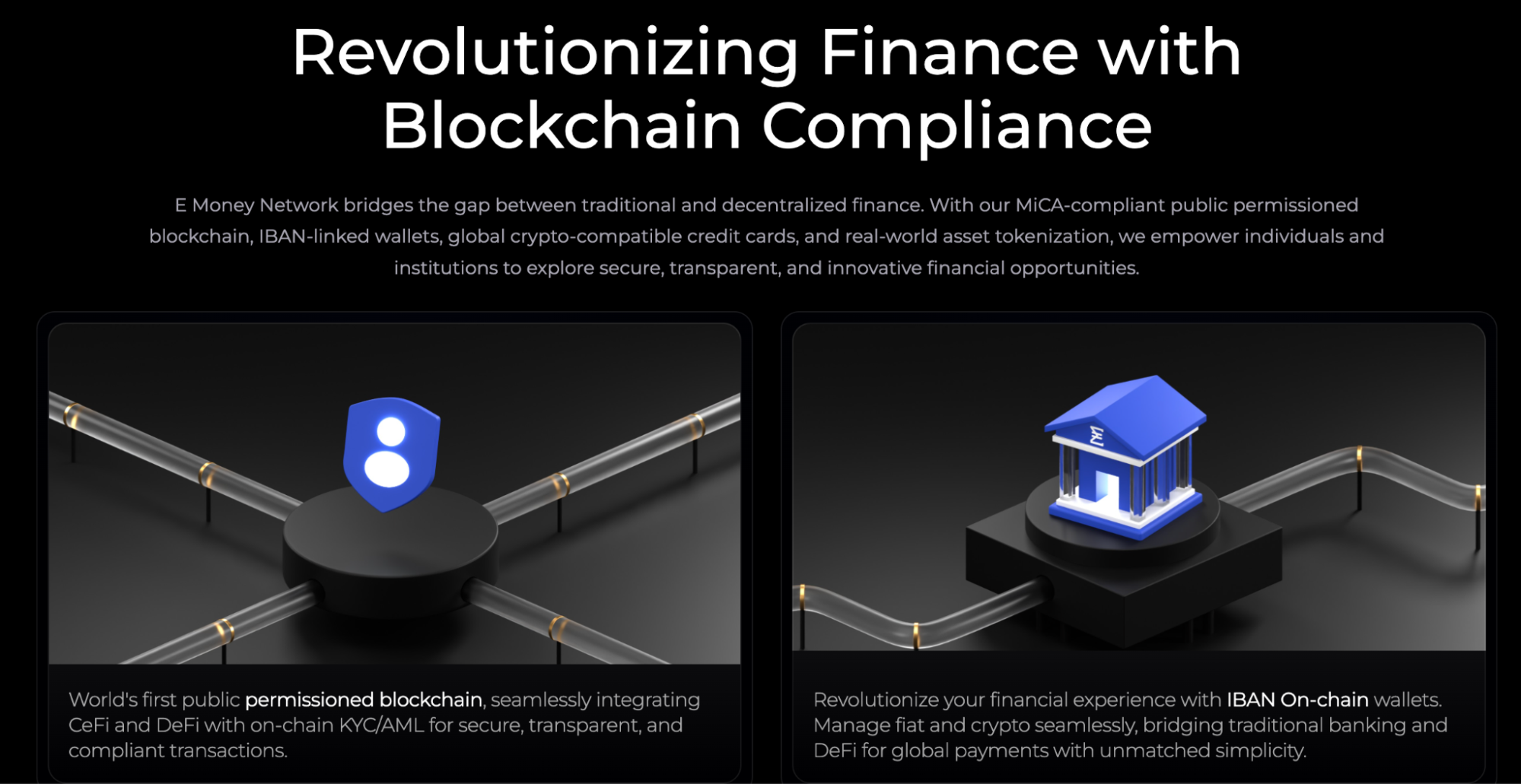
Develop a secure vault component within your application to store the user’s private keys and credential bundles. This vault acts as the user’s personal identity wallet, allowing them to manage access permissions. The vault should never expose raw PII to your backend servers.
Integrate a verification module that accepts ZKPs from the user’s vault. Your system should validate the cryptographic proof against the issuer’s public key to confirm the credential’s authenticity and the user’s eligibility. This step ensures compliance without data exposure.
This workflow transforms KYC from a friction-heavy onboarding hurdle into a seamless, reusable experience. By leveraging zero-knowledge proofs, you maintain strict regulatory adherence while empowering users with true data ownership.
Common questions about decentralized identity
Users often confuse decentralized KYC vaults with the broader decentralized exchange (DEX) landscape. Understanding the distinction is essential for anyone navigating Web3 compliance.
Do decentralized exchanges have KYC?
Not necessarily. Many decentralized exchanges, like Uniswap and PancakeSwap, operate as no-KYC platforms that do not require ID verification or even account registration [src-serp-6]. However, a decentralized KYC vault serves a different purpose: it allows users to verify their identity once with a trusted provider and then reuse those verifiable credentials across multiple platforms without repeatedly submitting personal data.
How is personal data stored in a vault?
Decentralized KYC vaults rely on self-sovereign identity principles. Instead of storing sensitive documents on a central server, your data is encrypted and stored locally on your device or in a secure digital wallet. When a service requires verification, you share only the necessary proof, such as a "over 18" status, rather than your entire identity record.
Can I use zero-knowledge proofs for compliance?
Yes. Zero-knowledge proofs (ZKPs) are a core technology in this space. They allow you to prove that you meet specific compliance criteria—such as being on a sanctioned list or having passed a background check—without revealing the underlying data. This ensures regulatory adherence while preserving user privacy.
Technical Flow of Verifiable Credentials
Understanding the cryptographic handshake between the Verifier, the User, and the Service Provider is critical for developers and compliance officers alike. The following chart illustrates the data flow and verification steps in a typical decentralized KYC interaction.
This flow highlights how data minimization is achieved. The Service Provider never receives the raw Verifiable Credential, only the proof of its validity. This ensures that the user's identity remains private while satisfying regulatory requirements.
No comments yet. Be the first to share your thoughts!