The shift to vault-based identity
Centralized Know Your Customer (KYC) systems have become a liability for the Web3 ecosystem. When financial institutions and exchanges store user identity documents on single, centralized servers, they create high-value targets for hackers. The result is a cycle of data breaches that erode user trust and expose individuals to identity theft. Beyond security, the current model is inefficient. Users must repeatedly submit the same sensitive documents to different platforms, creating redundancy that slows down onboarding and increases operational costs for providers.
The decentralized KYC vault strategy offers a structural fix. Instead of holding raw data, these vaults store encrypted credentials in user-controlled digital wallets. This approach shifts the burden of data management from the institution back to the individual. Users retain ownership of their verified identity information, granting access to specific parties only when necessary. This model aligns with the principles of decentralized identity, allowing banks and exchanges to solve existing challenges of sharing KYC information securely and cost-effectively.
By adopting this vault-based approach, the industry can move away from the "store everything, lose everything" paradigm. It establishes a foundation where compliance does not require sacrificing privacy. For organizations navigating the complex regulatory landscape of Web3, implementing decentralized KYC vaults is no longer just a technical upgrade; it is a strategic imperative for sustainable growth.
Core infrastructure components
A Decentralized KYC Vaults strategy relies on three distinct technical layers working in tandem. These components separate the heavy lifting of data processing from the immutable record of compliance, ensuring that user privacy is preserved while regulatory requirements are met.
The foundation is the encrypted JSON vault. Instead of storing raw identity documents on a public ledger, sensitive data is encrypted and stored in decentralized storage networks. As noted in implementations like EtherIDentity, these encrypted JSON vaults empower users with full control over their personal identity, allowing them to grant temporary access to verifiers without exposing the underlying data permanently [src-serp-6].
To bridge the gap between offline documents and digital verification, the system uses OCR and AI for data ingestion. Optical Character Recognition extracts text from IDs, while AI models validate the authenticity of the document and match facial features. This automated ingestion reduces manual review costs and accelerates the initial onboarding phase, which is critical for high-stakes financial compliance [src-serp-2].
Finally, a blockchain ledger serves as the proof-of-verification layer. The blockchain does not store the KYC data itself; it only records a cryptographic hash confirming that a specific user passed verification at a specific time. This creates an auditable trail for regulators without compromising the individual’s privacy, forming the backbone of a trustless Decentralized KYC Vaults strategy.

Market research and adoption trends
The decentralized KYC vaults strategy is moving from experimental to essential as regulatory pressure mounts. Traditional compliance models rely on centralized databases that become prime targets for hackers and sources of friction for users. In contrast, a decentralized KYC vault approach allows users to verify their identity once and share only the necessary proofs with multiple services. This shift reduces data hoarding risks while satisfying anti-money laundering (AML) requirements.
Adoption is currently driven by two main forces: the need for interoperability in DeFi and the demand for institutional-grade data integrity. Platforms like Zyphe’s KYC Passport illustrate the consumer side of this trend, allowing users to reuse credentials without repeated uploads. On the institutional side, solutions like Intellect’s Catalyst Blockchain Manager focus on syncing data to guarantee a single, golden copy of client information across entities. These systems ensure that when a user’s status changes, all linked parties are updated simultaneously, reducing compliance latency.
To understand the practical differences, it helps to compare the operational models directly.
| Feature | Traditional KYC | Decentralized KYC Vault |
|---|---|---|
| Data Storage | Centralized databases | User-controlled or distributed |
| User Experience | Repeated uploads per service | Verify once, reuse everywhere |
| Security Risk | High (single point of failure) | Lower (no central honeypot) |
| Compliance Sync | Manual or siloed updates | Automated via blockchain/state channels |
The market context for these technologies is closely tied to broader crypto adoption metrics. As institutional interest grows, the infrastructure supporting identity verification must scale without compromising privacy. The following widget reflects the current market activity in the sector, highlighting the liquidity and engagement levels that support such innovation.
Implementing the decentralized KYC vaults strategy
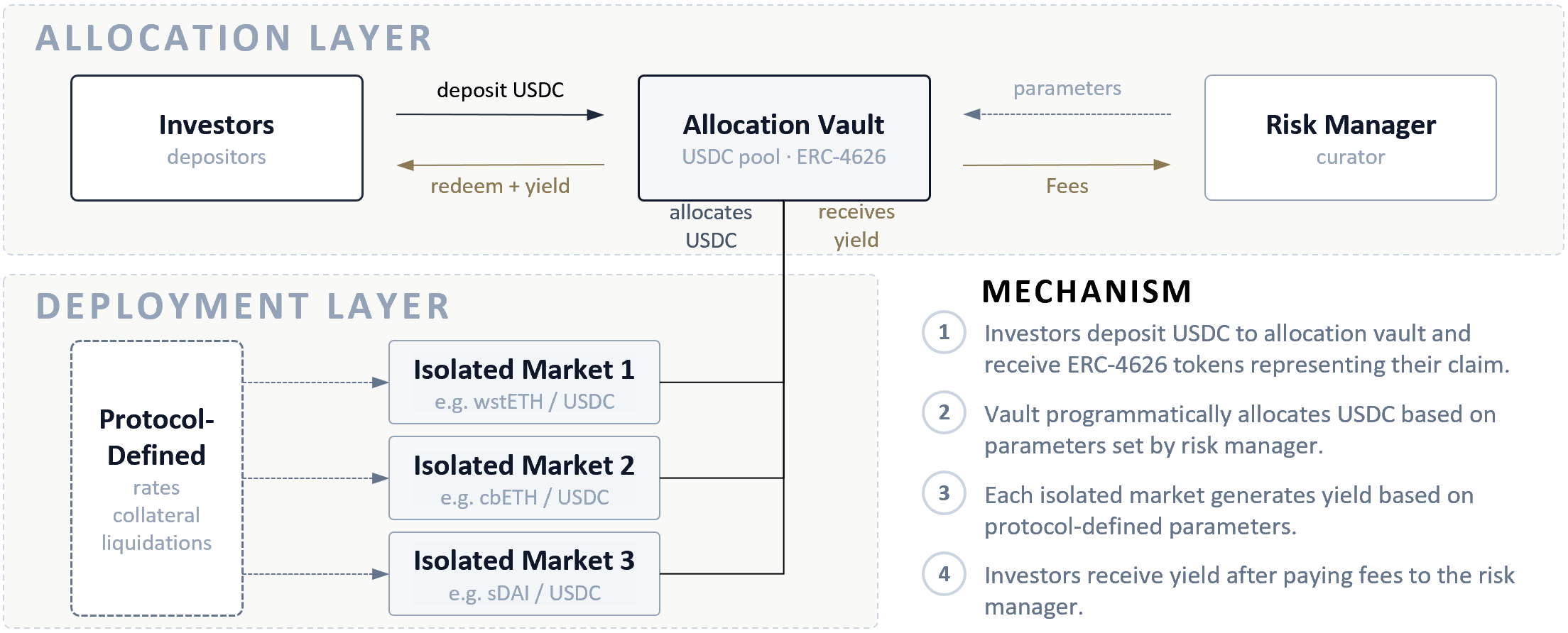
Building a decentralized KYC vaults strategy requires shifting from fragmented, siloed verification to a unified, user-centric model. The goal is to implement a "verify once, reuse everywhere" workflow that satisfies regulatory requirements without compromising user privacy. This approach relies on decentralized identifiers (DIDs) and verifiable credentials to create a secure, interoperable identity layer.
The implementation follows a structured lifecycle, from initial data collection to continuous compliance monitoring. By leveraging encrypted storage and zero-knowledge proofs, platforms can verify user status without exposing raw personal data. This section outlines the concrete steps to deploy this architecture effectively.
The process begins with the collection of basic customer information, including identity and address via official documents. This step mirrors traditional KYC but prepares the data for encryption. Platforms must ensure that the initial verification is robust, as this data forms the basis of the verifiable credential. Once verified, the raw data is encrypted and stored in a decentralized vault, such as an encrypted JSON vault, ensuring the user retains control.
After verification, the platform issues a verifiable credential to the user's digital wallet. This credential acts as a portable proof of identity, allowing the user to share their status across multiple services without repeated uploads. Tools like KYC Passport enable this by storing credentials in decentralized storage, ensuring no single entity holds a central copy of the user's data. This step is critical for enabling the "reuse" aspect of the strategy.
To maintain privacy, the system must support selective disclosure. Users can prove they meet specific criteria (e.g., age > 18, non-sanctioned) without revealing their full identity. This is often achieved through zero-knowledge proofs or AI-driven verification models that operate on encrypted data. This step ensures that only the necessary information is shared with each service, minimizing data exposure and reducing liability.
The vault must integrate with standard decentralized identity protocols to ensure interoperability. Solutions like EtherIDentity demonstrate how users can maintain full control over their personal identity across different platforms. This integration allows the vault to function as a universal identity layer, connecting various DeFi protocols, exchanges, and service providers seamlessly.
The final step is ongoing monitoring for any changes or suspicious activities. While the initial verification is one-time, the system must continuously check the user's credential status against sanction lists and risk profiles. This ensures that the "verify once" model does not compromise long-term compliance. Automated alerts and periodic re-verification triggers help maintain the integrity of the decentralized KYC vaults strategy over time.
By following this workflow, organizations can build a robust decentralized KYC vaults strategy that balances regulatory compliance with user privacy. The key is to ensure that the user remains the central authority over their identity data, while platforms benefit from secure, verifiable credentials.
Common pitfalls in decentralized KYC vault implementation
Building a Decentralized KYC vault strategy requires more than just writing smart contracts; it demands rigorous operational discipline. The most frequent failure point is poor key management. Because these vaults rely on trustless, ownerless code to control tokens, the private keys governing access must be secured with institutional-grade rigor. If key storage is mishandled, the entire compliance framework collapses, exposing users to irreversible loss. Treat your key infrastructure as the primary asset, not an afterthought.
Interoperability is the second major hurdle. A Decentralized KYC vault is only as useful as the systems it connects to. If your verification protocol cannot communicate with external identity providers or regulatory databases, you create data silos that defeat the purpose of decentralization. Ensure your architecture supports standard APIs and cross-chain compatibility from day one, rather than retrofitting connections later.
Finally, user education is often overlooked. Users accustomed to centralized exchanges expect instant, frictionless onboarding. When faced with the complexity of self-sovereign identity and cryptographic verification, many abandon the process. Clear, concise guidance on how to manage their credentials is essential for adoption.
To mitigate these risks, consider this pre-launch checklist:
-
Audit key backup and recovery procedures with a third-party security firm.
-
Verify API compatibility with at least two major identity providers.
-
Draft user-facing documentation explaining the verification workflow.
-
Conduct a compliance audit against relevant AML/KYC regulations.
-
Run a bug bounty program to identify smart contract vulnerabilities.
No comments yet. Be the first to share your thoughts!