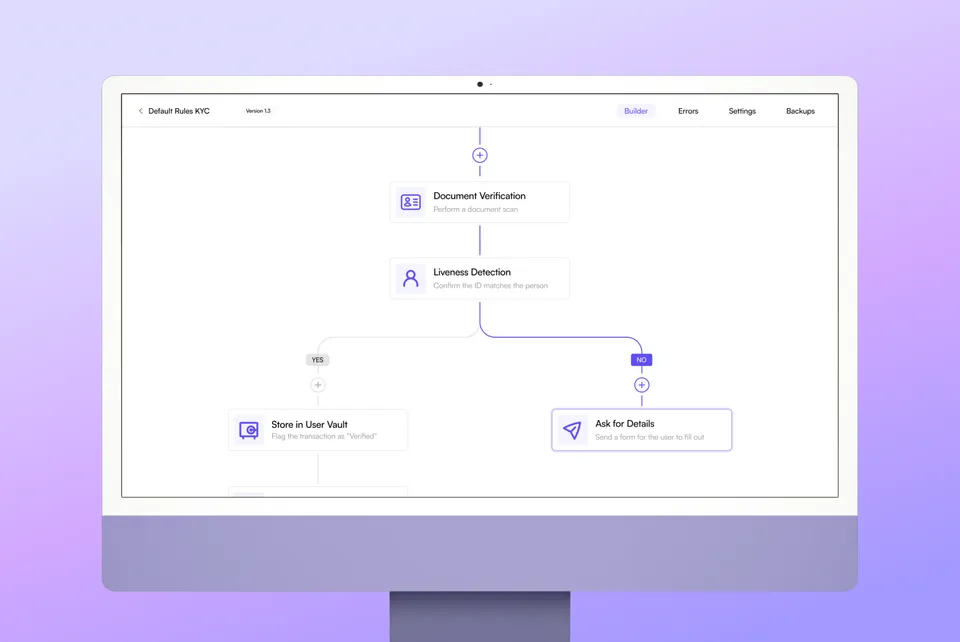
Defining the vault infrastructure model
Decentralized KYC vaults infrastructure represents a structural shift in how identity verification data is stored, processed, and shared. Unlike traditional centralized databases where a single entity holds the entire dataset, this model distributes cryptographic keys and encrypted personal identifiable information (PII) across a decentralized network. The result is a system where the data owner retains control, and verification providers access only specific, consented proofs rather than raw identity documents.
Technically, these vaults often leverage blockchain platforms, such as Ethereum, to establish a verifiable audit trail without exposing sensitive data on-chain. The actual identity documents remain off-chain, stored in secure, encrypted environments, while the blockchain records the hash and permission status. This architecture significantly reduces the attack surface for large-scale data breaches, a persistent risk in conventional KYC models where a single compromised server can expose millions of records.
From a legal and compliance perspective, this infrastructure changes the liability landscape. By keeping personal data off the servers of the verification service provider, the vault model helps organizations avoid holding data they are not directly responsible for managing. As noted in industry analyses, cryptographic identity vaults keep personal data off your servers and out of your liability list, allowing for KYC data retention compliance without the traditional operational overhead. This distinction is critical for financial institutions seeking to balance regulatory requirements with data minimization principles.
Zero-Knowledge Proofs and Data Minimization
Decentralized KYC vaults infrastructure relies on zero-knowledge proofs (ZKPs) to verify identity without exposing raw personally identifiable information (PII). This cryptographic approach allows users to prove they meet specific criteria—such as being over 18 or holding a valid passport—without sharing the underlying documents. For privacy-conscious users, this is the core value proposition: verification without exposure.
In a typical system, a user generates a zero-knowledge proof locally on their device. This proof is a mathematical statement that confirms the validity of their credentials against a registry or oracle. The verifier, such as a DeFi protocol or exchange, checks the proof against the blockchain. If the proof is valid, the service grants access. The verifier never sees the user's name, address, or document scan. This process shifts the balance of power from centralized institutions back to the individual.
This architecture solves the "single point of failure" problem inherent in traditional KYC. If a centralized database is breached, all user data is compromised. With ZKPs, even if the verification layer is compromised, the attacker gains nothing but a useless mathematical proof. The actual PII remains encrypted and stored in the user's vault, accessible only via their private keys.
The integration of ZKPs into decentralized KYC vaults infrastructure creates a trustless environment. Users can reuse their verified credentials across multiple platforms without re-submitting sensitive data each time. This reduces friction for onboarding while maintaining rigorous security standards. The system ensures that identity verification is both secure and respectful of user privacy.
Oracles as the Bridge to Traditional Finance
Decentralized KYC vaults store identity proofs on-chain, but traditional financial institutions cannot read blockchain ledgers directly. This gap requires a reliable translation layer. Decentralized KYC oracles act as this bridge, converting on-chain identity status into off-chain compliance signals that banks and payment processors can verify.
These oracles function like notaries for digital identity. They pull data from decentralized identity (DID) protocols and verify the cryptographic signatures attached to a user’s credentials. Instead of exposing sensitive personal documents, the oracle confirms a binary status: verified or not. This allows institutions to accept a compliant user without storing their raw data, reducing liability and regulatory risk.
The infrastructure relies on standardized protocols to ensure interoperability. By adhering to established DID standards, oracles can translate identity claims into formats recognized by legacy banking systems. This enables seamless onboarding for users moving between DeFi and traditional finance.
Trust in this system depends on the oracle’s ability to prevent manipulation. Decentralized KYC solutions distribute verification across multiple nodes, making it significantly harder for a single actor to forge a compliance signal. This distributed approach lowers the likelihood of breaches compared to centralized identity databases, offering a more robust foundation for institutional adoption.
Compliance risks and liability shifts
When you move from centralized KYC to decentralized KYC vaults infrastructure, the legal map changes fundamentally. The liability for data breaches doesn't vanish; it migrates. In traditional models, the platform holding the database is the primary target for regulators and plaintiffs. In decentralized systems, that target shifts to the architects of the trust layer: smart contract auditors, oracle providers, and the protocol operators who integrate them.
This shift creates a new category of legal exposure. If a decentralized KYC vault fails to properly verify identity data due to a flawed oracle feed or a smart contract vulnerability, the protocol operator can no longer hide behind "third-party custodian" disclaimers. They are now directly responsible for the integrity of the verification process. This means legal teams must scrutinize the code that handles personal identifiable information (PII) with the same rigor they apply to financial transactions.
The implications extend beyond just the code. As noted by industry analysis, decentralized PII storage aims to keep personal data off servers and out of liability lists. However, this only works if the cryptographic proofs are legally sound. If an oracle provider feeds incorrect data into the vault, causing a false negative in identity verification, the protocol operator may face regulatory penalties for facilitating unverified access. The "decentralized" label does not absolve operators of compliance duties under laws like GDPR or AML frameworks.
Protocol operators must now treat legal compliance as a technical specification. This means ensuring that every component in the decentralized KYC vault infrastructure—from the zero-knowledge proof generator to the final data retrieval mechanism—has a clear chain of custody and legal accountability. The era of "move fast and break things" is over in this vertical; the cost of breaking compliance is no longer just a fine, but a total collapse of trust in the protocol.
Market adoption and infrastructure players
The decentralized KYC vaults infrastructure market is shifting from experimental protocols to regulated, enterprise-grade systems. As Web3 businesses integrate compliance layers, the focus has moved beyond simple identity verification to managing data residency, verification speed, and regulatory alignment. This shift is critical for institutions seeking to bridge DeFi yield opportunities with legal mandates.
The following table compares leading infrastructure providers based on their technical capabilities and compliance frameworks. These metrics reflect the current state of the market as institutions evaluate vendors for 2026 integration.
| Provider | Data Residency | Verification Speed | Regulatory Alignment |
|---|---|---|---|
| Entity A | EU/GDPR | < 5 sec | MiCA/AML |
| Entity B | Global/Local | < 10 sec | FATF Travel Rule |
| Entity C | US/State-level | < 3 sec | BSA/FinCEN |
| Entity D | Off-chain/Zero-Knowledge | < 2 sec | ISO 27001 |
Adoption trajectories vary by region. European providers often lead in GDPR-compliant storage, while US-based firms prioritize FinCEN alignment. The underlying technology increasingly relies on zero-knowledge proofs to verify identity without exposing raw personal data, a standard that is becoming non-negotiable for institutional DeFi vaults.
No comments yet. Be the first to share your thoughts!