Why traditional KYC fails at scale
The current model for identity verification is built on a centralization paradox. Financial institutions and service providers are forced to collect, store, and maintain massive databases of sensitive personal information. This creates a single point of failure that is both technically vulnerable and legally hazardous. When you aggregate enough data, you create a honeypot for cybercriminals and a liability minefield for regulators.
The problem is not just the risk of a hack; it is the operational burden of maintaining a "golden copy" of every client's identity across multiple jurisdictions. Traditional KYC requires institutions to sync data and documents manually or through fragmented APIs, leading to errors and delays. This centralized approach guarantees that every party in the chain holds a copy of your data, multiplying the attack surface with every new service you use.
Decentralized KYC (DKYC) addresses this by splitting identity data across user-controlled credentials and zero-knowledge proofs. Instead of storing raw data, institutions verify proofs of authenticity. This architectural shift removes the need for centralized storage, turning the honeypot into a distributed system where the user retains sovereignty over their identity. The vault concept ensures that data is only shared when necessary, and only in the form of verified claims, not raw documents.
How decentralized KYC vaults work
The core challenge in decentralized identity is balancing compliance with privacy. Traditional KYC requires you to hand over your passport or driver’s license to every service you use. Decentralized KYC vaults flip this model. Instead of storing sensitive documents on a company’s server, you hold them in your own digital wallet, often called a "vault."
The vault: your personal credential storage
Think of the vault as a secure, digital glove compartment. It doesn’t just store data; it manages access. When you complete KYC with a trusted issuer (like a bank or government body), they sign a Verifiable Credential. This credential is cryptographically sealed and sent to your vault. You now own the proof of your identity, not the institution that issued it.
This setup changes the risk landscape. If a central database is breached, millions of identities are exposed. With a vault, there is no central honeypot for hackers. The data stays on your device or in a decentralized storage network you control. You decide who sees it, when, and for how long.
Zero-knowledge proofs: showing, not telling
The magic that makes this system practical is the Zero-Knowledge Proof (ZKP). A ZKP allows you to prove a statement is true without revealing the underlying data. For KYC, this means you can prove you are over 18, or that you are not on a sanctions list, without sharing your birthdate or full name.
The verifier (the DeFi protocol or exchange) receives a cryptographic proof, not your personal details. They can verify the proof’s validity against the issuer’s public key instantly. This process is mathematically rigorous, ensuring that the proof could only have been generated by someone holding a valid credential.
The flow: issuer, vault, verifier
The architecture involves three main actors:
- Issuer: The entity that verifies your identity and issues the signed credential.
- Holder (You): You store the credential in your vault.
- Verifier: The service requesting proof of identity.
When a verifier needs to check your status, your vault generates a ZKP based on the stored credential. This proof is sent to the verifier, who checks it against the issuer’s public key. If the proof is valid, access is granted. No raw data ever leaves your vault.
This model shifts liability. The burden of secure storage moves from the service provider to the user’s device or chosen storage solution. While this offers superior privacy, it also places the responsibility of key management squarely on the user. Losing your private keys means losing access to your identity proofs forever, a high-stakes risk that requires careful attention to recovery options.
Who builds identity infrastructure
The market for decentralized identity infrastructure is splitting into two distinct camps. On one side are established centralized providers like Sumsub and IDmerit, which handle verification through traditional, siloed databases. On the other are newer decentralized architectures, such as ZKVault, which aim to replace that centralization with cryptographic proofs.
The core tension here is the "golden copy" problem. In traditional systems, every institution maintains its own copy of your identity data. This creates redundancy, increases the attack surface for data breaches, and forces users to repeat the same verification steps for every new platform. Decentralized vaults attempt to solve this by ensuring a single, verified source of truth that can be reused across services without exposing raw personal data [src-serp-2].
While centralized providers offer immediate compliance familiarity, they concentrate risk. If the central provider is compromised, millions of identities are exposed. Decentralized models shift that risk to the user’s wallet or vault, but they require a more complex user experience and new regulatory interpretations. The market is currently weighing the convenience of centralized silos against the privacy and security benefits of a unified, cryptographic identity layer [src-serp-8].
| Provider Type | Privacy Model | Data Storage | Primary Compliance Goal |
|---|---|---|---|
| Centralized (e.g., Sumsub) | Provider-held PII | Centralized database | Regulatory reporting |
| Decentralized Vault (e.g., ZKVault) | Zero-knowledge proofs | User-controlled vault | Data minimization |
| Hybrid Solutions | Partial encryption | Distributed ledger | Auditability |
Navigating compliance without storing personal data
Decentralized KYC vaults solve a high-stakes regulatory problem: how to prove identity without becoming a honeypot for hackers. Traditional centralized databases store Personally Identifiable Information (PII) in one place, creating a massive liability. If that central server is breached, user identities are stolen. Decentralized vaults shift this risk by never storing raw PII on-chain or in a central database. Instead, they store encrypted credentials or zero-knowledge proofs.
This architecture aligns with the principle of data minimization, a core tenet of the General Data Protection Regulation (GDPR). Under GDPR, organizations must only collect data that is strictly necessary for the specific purpose. By using cryptographic proofs, a decentralized vault allows a user to prove they are over 18 or not on a sanctions list without revealing their name, address, or date of birth. This satisfies the "right to be forgotten" and reduces regulatory exposure significantly.
The process begins with a trusted issuer, such as a government agency or accredited KYC provider, verifying the user’s identity. Once verified, the issuer creates a Verifiable Credential (VC). This credential is a cryptographically signed document that attests to specific facts about the user. The user receives this credential in their digital wallet, keeping it under their sole control.
The user stores the VC in a decentralized identity vault. This vault is not a blockchain node but a secure, user-controlled storage mechanism, often leveraging decentralized storage networks like IPFS or Arweave for the encrypted payload. The key to decrypting the data remains with the user. This ensures that no third party, including the platform requesting the KYC, can access the underlying PII without explicit, temporary consent.
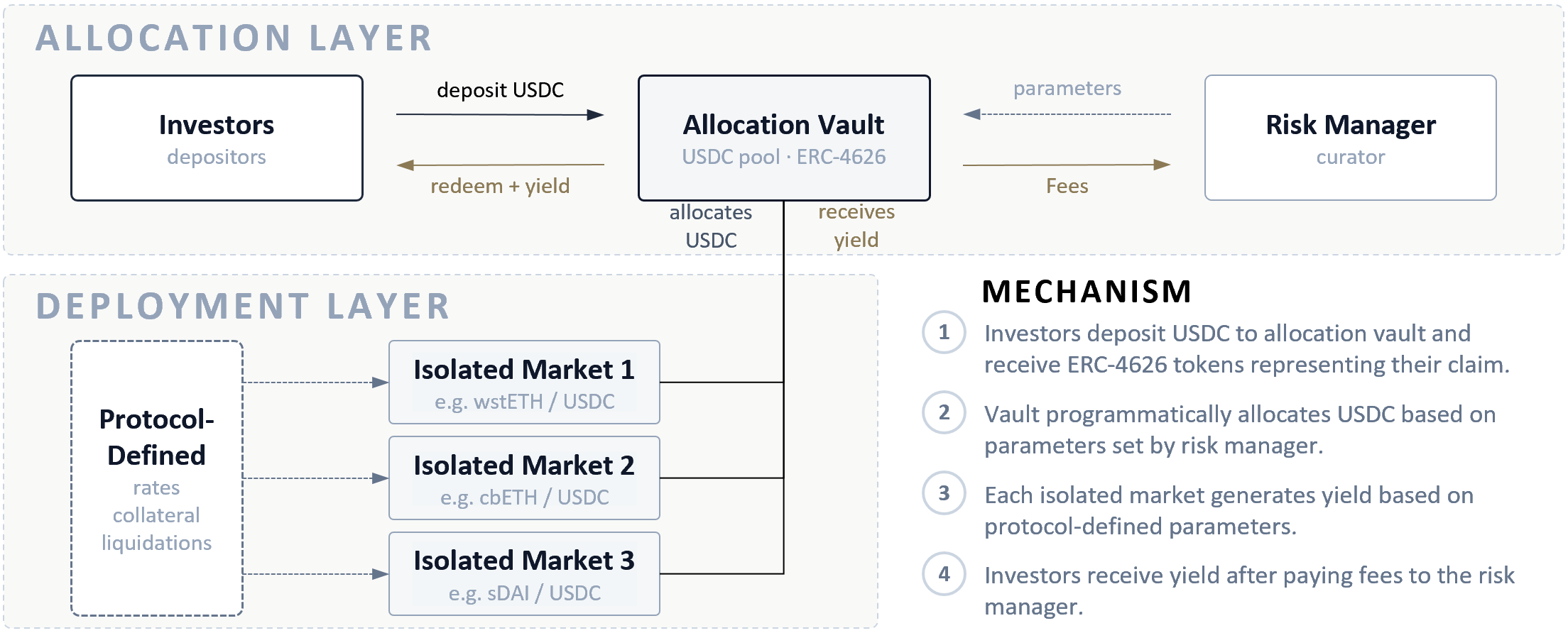
When a platform requests KYC, the user does not send their ID card or passport. Instead, they generate a zero-knowledge proof (ZKP). This mathematical proof demonstrates that the credential in the vault satisfies specific criteria (e.g., "age > 18") without revealing the actual data. The proof is computed locally on the user’s device, ensuring that sensitive information never leaves their control.
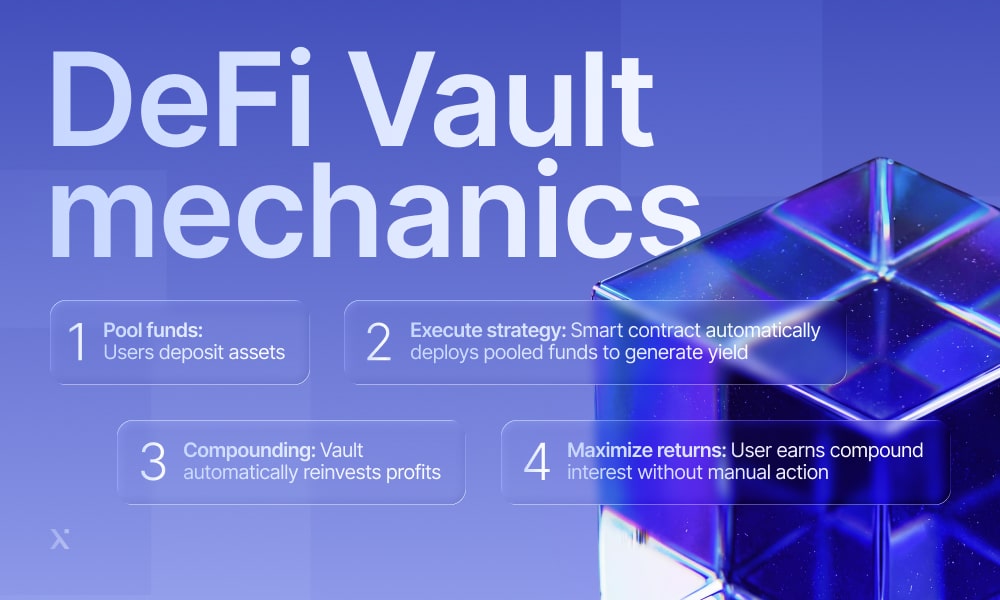
The receiving platform verifies the ZKP against the issuer’s public key. If the proof is valid, the platform grants access or completes the onboarding. This verification can happen on-chain for immutable audit trails or off-chain for speed. Crucially, the platform receives only a boolean result (true/false) or a limited data set, never the user’s full identity. This satisfies AML/KYC requirements while adhering to GDPR data minimization principles.
Choosing the right KYC vault provider
Selecting a provider for your decentralized KYC vault is a high-stakes decision. You aren't just picking a software vendor; you are choosing a regulatory partner and a technical foundation. The wrong choice can lead to compliance failures, data leaks, or a product that simply doesn't work with your existing stack.
Focus on three non-negotiable pillars: interoperability, zero-knowledge (ZK) proof support, and regulatory alignment. If a provider can't do these three things well, walk away.
Interoperability matters more than features
A KYC vault is useless if it can't talk to the rest of your ecosystem. Your provider must support standard protocols like W3C Verifiable Credentials and DID (Decentralized Identifiers). This ensures that the identity data stored in the vault can be shared with multiple services without forcing users into a single, walled-garden ecosystem.
Look for providers that offer open APIs and SDKs. If you have to build custom integrations for every new partner, your engineering costs will skyrocket. The best vaults act as a universal layer, not a silo.
ZK-proof support is the security baseline
Zero-knowledge proofs are what make decentralized KYC viable. They allow a user to prove they meet a criteria (e.g., "over 18") without revealing the underlying data (e.g., "born on Jan 1, 1990").
Ensure your provider supports the latest ZK-circuits and can generate proofs efficiently. Slow proof generation kills user experience. If a provider relies on old, non-ZK methods or proprietary cryptographic schemes that aren't widely audited, the security benefits are theoretical at best. Verify that their ZK infrastructure is open-source and has been independently audited.
Regulatory alignment keeps you safe
Decentralized doesn't mean lawless. Your provider must understand the regulatory landscape in your target markets. This includes GDPR, CCPA, and local AML (Anti-Money Laundering) regulations.
Ask how they handle data subject rights, such as the right to be forgotten. In a decentralized system, erasing data is complex. A compliant provider will have clear, technical mechanisms for revoking credentials and ensuring data is not permanently stored on-chain or in immutable storage. Check if they have legal opinions or compliance certifications from recognized bodies.
No comments yet. Be the first to share your thoughts!