How decentralized kyc vaults work
Decentralized KYC shifts identity verification from centralized databases to user-controlled credentials. Instead of storing sensitive documents on a single server, this architecture splits data across zero-knowledge proofs and verifiable credentials. The goal is to let users prove compliance without revealing the underlying personal information.
The verification flow
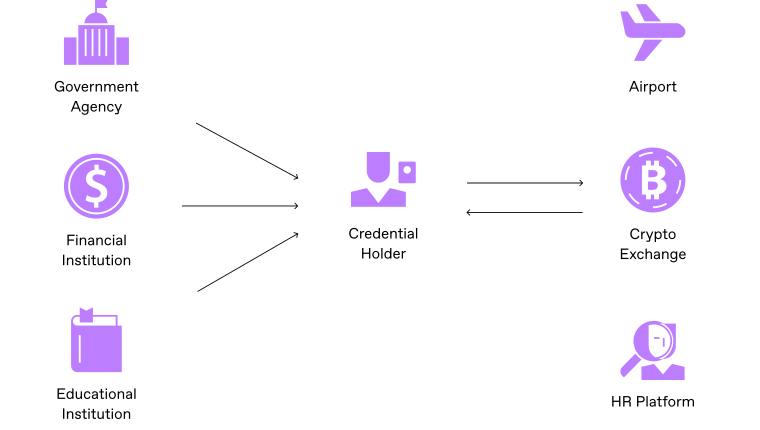
- Issuance: A trusted issuer (like a bank or government body) verifies your identity and issues a signed credential to your digital wallet.
- Storage: You hold the credential locally. No third party controls the raw data.
- Verification: When a service needs to confirm your status (e.g., age or accreditation), you generate a zero-knowledge proof.
- Validation: The service checks the proof against the issuer’s public key. It confirms the claim is true without seeing the actual data.
Common pitfalls
Many projects fail because they treat decentralized KYC as a simple database migration. The real challenge is interoperability. If a credential issued by one issuer isn’t recognized by the verifier’s system, the user experience breaks. Always check if the target platform supports the specific credential format (like W3C VC) you plan to use.
Proof of compliance
The primary advantage is data minimization. Institutions get a "golden copy" of compliance status without holding the raw PII. This reduces liability in case of a breach. However, it requires robust infrastructure to manage key recovery and credential revocation, which remains a complex engineering hurdle.
Decentralized kyc vault choices that change the plan
Decentralized KYC vaults shift custody of identity data from centralized databases to user-controlled credentials and zero-knowledge proofs. This architecture reduces institutional liability but introduces new operational complexities. Institutions must evaluate how verification latency, cryptographic overhead, and regulatory auditability impact their specific workflows. The following comparison breaks down the primary tradeoffs across four critical dimensions.
| Factor | Centralized Database | Decentralized Vault | Key Tradeoff |
|---|---|---|---|
| Data Custody | Institution holds PII | User holds credentials | Reduced breach risk vs. user support burden |
| Verification Speed | Instant lookup | ZK proof generation | Lower latency vs. computational cost |
| Regulatory Audit | Full record access | Proof of compliance only | Easy auditing vs. complex proof validation |
| Interoperability | Siloed systems | Universal credentials | Integration friction vs. reusable identity |
The most immediate impact is on verification latency. Centralized systems offer instant lookups, whereas decentralized vaults require generating zero-knowledge proofs. This cryptographic step adds computational overhead, potentially slowing onboarding for high-volume platforms. However, this delay is often offset by reduced fraud rates, as decentralized credentials are harder to forge than traditional document uploads.
Regulatory auditability presents a second major consideration. Traditional databases allow institutions to view full user records, simplifying compliance reporting. Decentralized vaults provide only cryptographic proofs of compliance, which can complicate internal audits. Institutions must ensure their compliance teams are trained to validate these proofs rather than relying on raw data access.
Build a Decentralized KYC Vault That Actually Works
Decentralized KYC vaults shift identity verification from centralized silos to user-controlled credentials. Instead of uploading sensitive documents to a central server, users hold their data and generate zero-knowledge proofs to satisfy compliance requirements. This architecture reduces liability and enhances privacy, but it requires careful infrastructure planning.
Before committing to a specific protocol, evaluate the technical and regulatory tradeoffs using this decision framework.
Identify exactly what data needs to be verified. Are you proving age, residency, or accreditation? Narrowing the scope prevents over-engineering. Start with minimal data requirements and expand only if specific use cases demand more granular proofs.
Choose a standard for issuing and verifying credentials. W3C Verifiable Credentials (VCs) are the current baseline for interoperability. Ensure your chosen standard supports the specific proof types required by your target jurisdictions, particularly regarding data minimization.
Implement ZKP circuits that allow users to prove attributes without revealing underlying data. This is the core privacy mechanism. Select a ZKP framework that balances computational efficiency with security guarantees, keeping in mind that complex proofs can increase on-chain costs.
A vault is only as good as the credentials it holds. Partner with recognized identity providers (Issuers) who can vouch for the data. These issuers must be legally compliant and technically capable of issuing verifiable credentials that your verifier can trust.
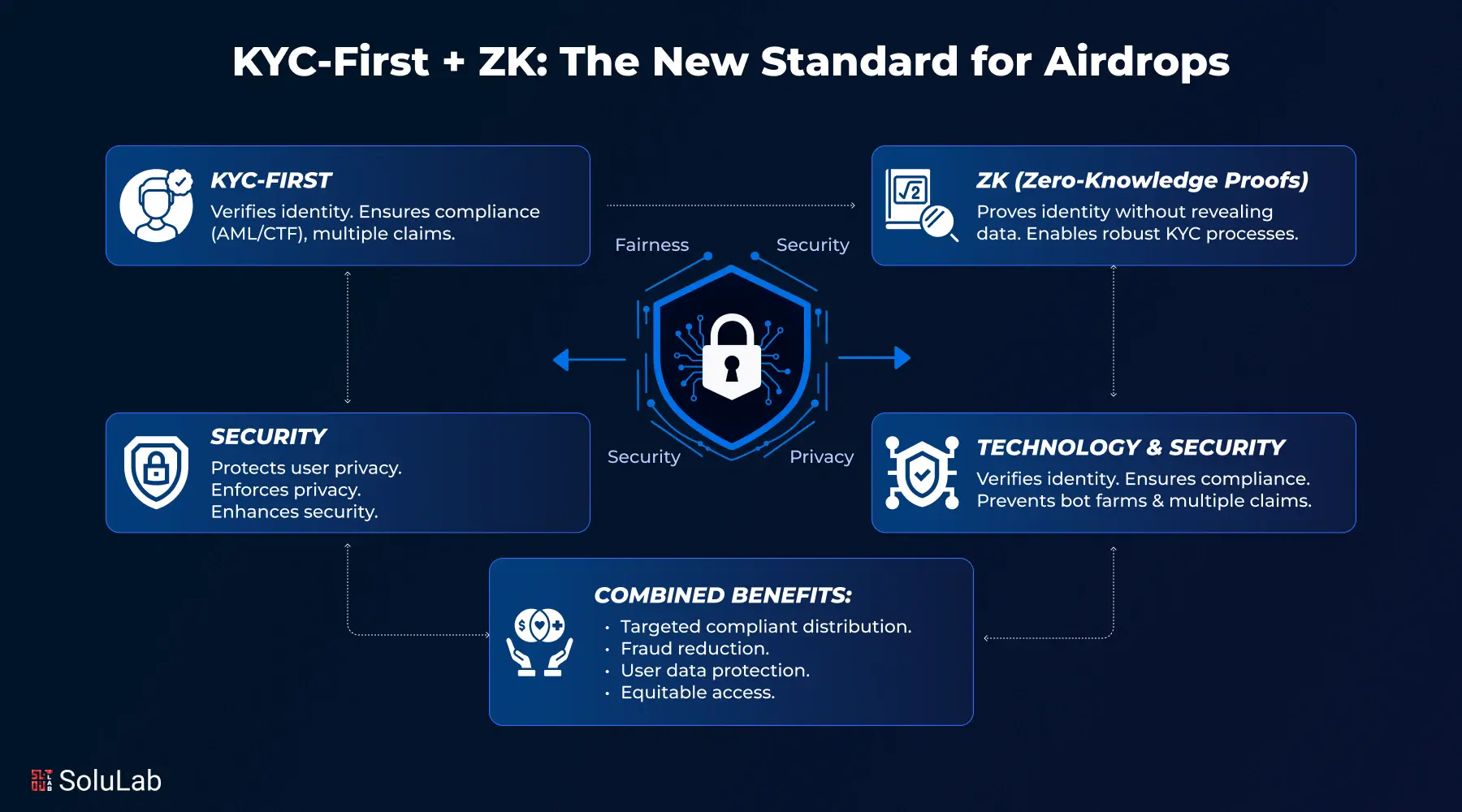
Build the frontend experience for institutions reviewing proofs. The interface should clearly display what data was verified and by whom, without exposing the raw personal information. Transparency here is critical for user trust and regulatory acceptance.
Before launch, audit your flow against GDPR, CCPA, and relevant financial regulations. Ensure users can revoke access to their vault data and that your architecture supports the "right to be forgotten" where applicable, even in a decentralized ledger context.
By following this sequence, you build a decentralized KYC vault that is both compliant and user-centric. The result is a system where identity is a utility, not a liability.
Spotting Weak KYC Claims
Not every "decentralized" verification tool protects your data. Many solutions simply move the bottleneck from a central server to a fragmented wallet interface, creating confusion without adding security. To separate robust infrastructure from marketing noise, check how the system handles identity aggregation and proof generation.
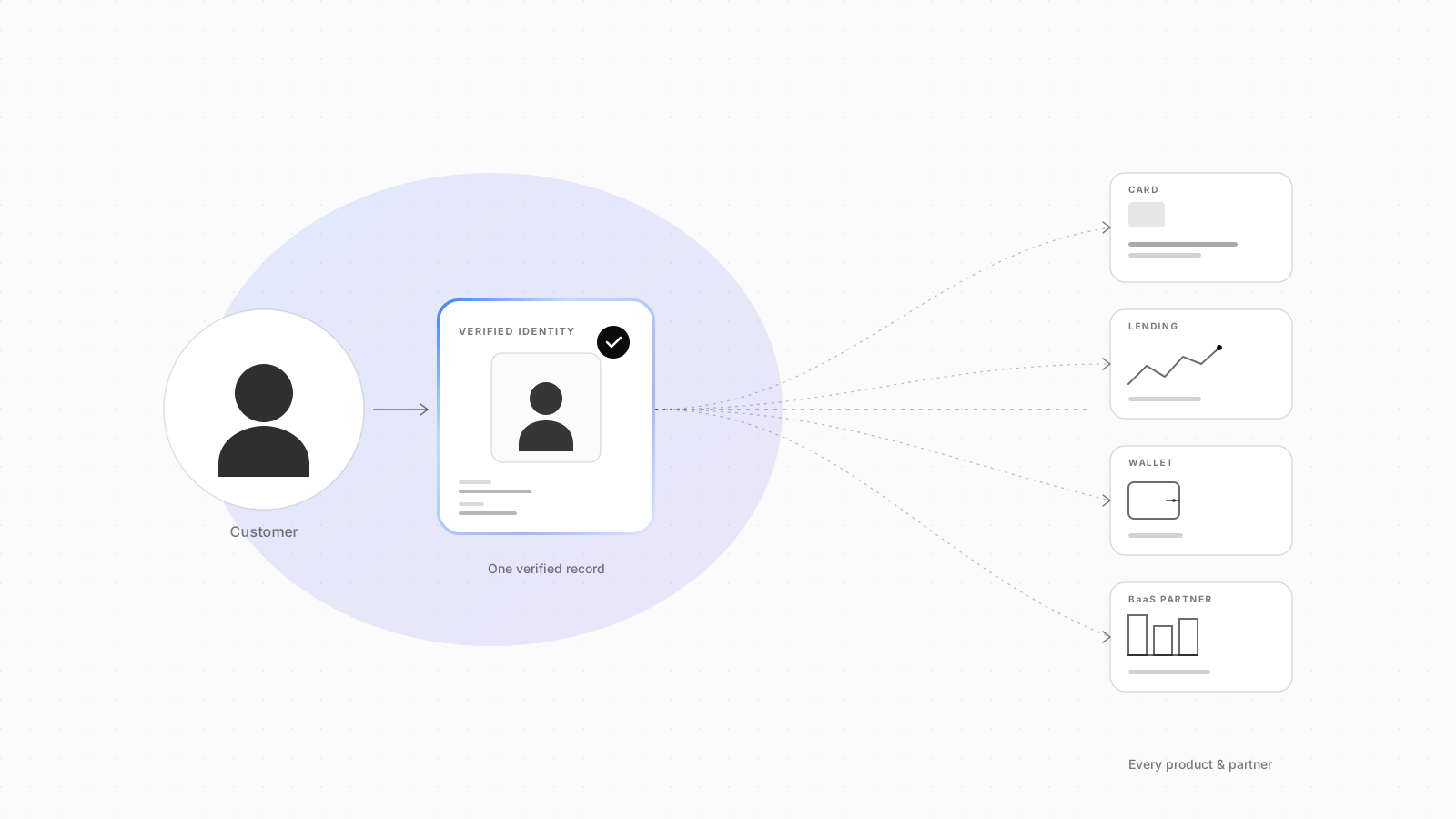
Avoid platforms that claim full decentralization while still requiring you to upload documents to a single, proprietary cloud bucket. True decentralized KYC splits identity data across user-controlled credentials and zero-knowledge proofs, ensuring no single entity holds the "golden copy" of your personal information. If the provider cannot explain how they sync data for institutions without centralizing custody, treat it as a weak option.
Also, watch for vague compliance statements. Legitimate solutions allow institutions to sync data and documents while guaranteeing a single, unified view of associated natural persons through verifiable credentials. If the workflow lacks clear audit trails or relies on outdated static attestations, it likely fails to meet 2026 regulatory standards for privacy-compliant Web3.
Decentralized kyc vaults: practical: what to check next
Before integrating decentralized identity solutions, it is essential to understand the trade-offs between privacy and regulatory compliance. While these vaults offer superior data control, they introduce new complexities for institutional onboarding and user experience.
No comments yet. Be the first to share your thoughts!