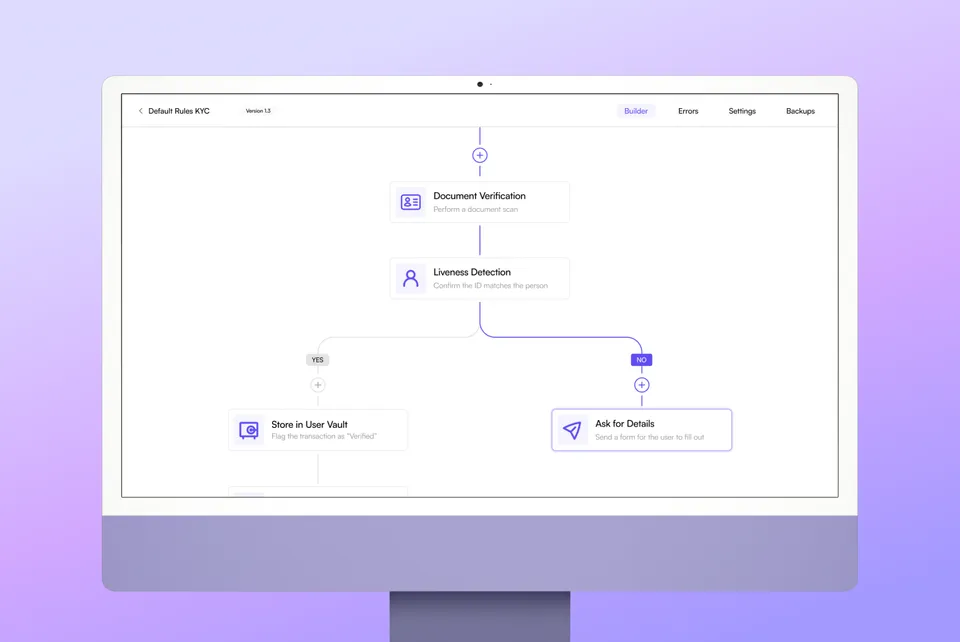
Decentralized KYC vaults budget
Decentralized KYC infrastructure is not a single commodity you buy off a shelf; it is an architectural stack. The cost structure depends entirely on whether you are building a consumer-facing identity wallet or an enterprise-grade compliance node. For most teams, the budget splits between identity verification APIs, zero-knowledge proof generation, and secure storage solutions.
If you are building a lightweight identity wallet for individual users, your primary costs are API calls to verification providers and gas fees for on-chain attestation. Services like Zyphe offer modular components that let you plug in AI verification agents without maintaining a full database. This approach keeps initial development costs low but introduces per-transaction fees that scale with user volume. You are essentially renting the compliance layer rather than owning it.
For enterprise or institutional use cases, the budget shifts toward data sovereignty and integration. Intellect’s Catalyst Blockchain Manager, for example, focuses on syncing a "golden copy" of client data across institutions. This requires significant engineering overhead to ensure data consistency and regulatory alignment. The cost here is less about transaction fees and more about development time, security audits, and ongoing maintenance of a private or permissioned ledger. You are paying for control and auditability, not just verification.
The tradeoff is clear: lower upfront costs with higher variable fees (SaaS model) versus higher upfront costs with lower variable fees (self-hosted model). Your budget should reflect your expected user volume and regulatory risk tolerance. If you are a startup, start with modular SaaS components to validate your product. If you are an institution, invest in a robust, self-hosted vault to maintain full control over sensitive data.
Shortlist real options
Decentralized KYC vaults shift personal data from centralized company databases into user-owned storage. This architecture eliminates the need to share raw personally identifiable information (PII) with every service provider. Instead, users hold a verifiable credential that can be cryptographically verified on demand.
When comparing solutions, focus on how they handle data synchronization and privacy. Some platforms use AI verification agents to process identity checks locally, ensuring the vault owner retains control. Others prioritize institutional needs, enabling multiple parties to sync documents while guaranteeing a single, golden copy of each client record.
The following table compares the strongest approaches currently available. These options balance compliance requirements with the privacy-first ethos of decentralized identity.
| Provider | Architecture | Primary Use Case | Data Control |
|---|---|---|---|
| Zyphe | AI Verification Agents | Consumer Identity | User-owned vaults eliminate PII sharing |
| Intellect Catalyst | Blockchain Manager | Institutional Sync | Single golden copy for associated persons |
| Socure | AI-Powered Onboarding | Crypto Platforms | Fraud prevention via AI analysis |
| Entrust | Verifiable Credentials | Decentralized Identity | Cryptographic verification on chain |
Choose the solution that aligns with your specific compliance burden. Consumer-facing apps benefit from the vault model, where users prove eligibility without exposing their full history. Institutional setups often require the synchronization capabilities offered by blockchain managers to maintain accurate records across departments.
Inspect the expensive parts
Decentralized KYC shifts the burden of data security from the institution to the user-owned vault, but this architecture introduces new failure modes that traditional audits miss. When a vault fails, the cost is not just a compliance fine; it is the loss of user trust and the inability to onboard clients. You must inspect the infrastructure where data moves and where access is granted.
Verify the substrate and data ownership
The core value proposition is that personal data never resides in the company database. Check that the verification agents interact with a substrate that allows users to retain ownership. If the system requires you to upload raw PII to a central server for "temporary" processing, the vault is theoretical, not functional. Ensure the architecture guarantees a single, golden copy of the client record across all associated natural persons without creating redundant, vulnerable data silos.
Audit the access control and sync logic
Institutions need to verify KYC status without seeing the underlying data. Inspect how the vault syncs data between parties. The system must use zero-knowledge proofs or similar cryptographic methods to prove compliance status. If the sync process requires sharing the actual document or biometric data between the user, the verifier, and the institution, the privacy guarantee is broken. Test the flow to ensure only the proof of status is shared.
Test the verification agent reliability
AI verification agents automate the initial checks, but they are prone to false positives and negatives. Evaluate the agent's accuracy against edge cases, such as damaged passports or non-standard name formats. A high rejection rate forces users to repeat the process, increasing friction and abandonment. Ensure there is a clear, low-friction appeal process for rejected verifications that does not require manual document re-submission to a central inbox.
Check for regulatory alignment and audit trails
Decentralization does not exempt you from AML/KYC regulations. The vault must maintain an immutable, tamper-proof audit trail of all verification events. This trail must be accessible to regulators upon request, even if the underlying data remains private. Verify that the system logs consent, verification timestamps, and the specific data fields used for the proof. Without this, you cannot prove compliance during a regulatory inspection.
Review the user onboarding experience
The most expensive failure is user drop-off. The vault must abstract the complexity of cryptographic keys and decentralized identifiers. If the user has to manage private keys or seed phrases manually, the adoption rate will be near zero. The interface should handle key management securely in the background, offering social login or custodial options where appropriate for the target market, while still maintaining the vault's integrity.
Ownership costs and maintenance surprises
The sticker price of a decentralized KYC vault is often just the entry fee. The real cost lies in the ongoing maintenance required to keep the vault compliant, secure, and functional. When a cheap buy stops being cheap, it is usually because the hidden labor of data synchronization and regulatory updates exceeds the initial savings.
The hidden cost of "golden copies"
Decentralized KYC aims to create a single, golden copy of each client's data, eliminating redundant PII storage across company databases. However, maintaining this single source of truth requires constant synchronization. If your infrastructure cannot seamlessly sync data between the user-owned vault and your compliance backend, you will face manual reconciliation costs. This is where the "cheap" solution often fails: it shifts the burden of verification from the provider to your internal team.
Maintenance surprises in 2026
Regulatory landscapes shift faster than software updates. A vault that was compliant in 2024 may require significant code changes in 2026 to meet new standards. The cost of these updates is not just in development hours but in the downtime and potential loss of customer trust during transitions. When evaluating providers, look for those who absorb the cost of regulatory adaptation rather than passing it on as per-seat fees or custom development charges.
When cheap stops being cheap
A low-cost vault often lacks the robustness to handle high-volume verification or complex user identities. This leads to higher false-positive rates, requiring more human review. If your team spends 20% of their time manually verifying identities that the vault should have handled automatically, the savings from the low subscription fee are erased. Choose a solution that balances cost with automation depth.



As an Amazon Associate, we may earn from qualifying purchases.
Decentralized KYC Vault FAQs
What is a red flag during KYC verification?
The biggest red flag is a mismatch between the biometric data and the government-issued ID. If the facial recognition score falls below the provider’s threshold, or if the document shows signs of digital manipulation, the verification fails immediately. In decentralized systems, this also includes a lack of a valid verifiable credential from a trusted issuer. Without that cryptographic proof, the vault cannot confirm the user’s identity, halting the entire onboarding process.
Who are the top 5 KYC providers?
Leading providers include Socure, Jumio, Onfido, Sumsub, and Veriff. These firms dominate the market by offering AI-powered document analysis and biometric matching. For decentralized applications, many teams now integrate these traditional providers via APIs that output verifiable credentials, which are then stored in user-owned vaults. This hybrid approach combines the regulatory trust of established providers with the privacy benefits of decentralized storage.
What are the four pillars of Know Your Customer (KYC)?
KYC rests on four core pillars: Customer Identification Program (CIP), Customer Due Diligence (CDD), Enhanced Due Diligence (EDD), and ongoing monitoring. CIP verifies the basic identity of the user. CDD assesses the risk level based on that identity. EDD applies to high-risk clients, requiring deeper investigation. Finally, ongoing monitoring ensures that transactions remain consistent with the user’s profile over time. Decentralized vaults primarily automate the CIP and CDD steps through smart contracts.
Is KYC mandatory for all crypto?
KYC is mandatory for centralized exchanges and regulated platforms, but not for all crypto interactions. Peer-to-peer transactions on decentralized networks do not require identity verification. However, if you want to convert crypto to fiat currency or use regulated DeFi protocols, KYC is almost always required. The goal of decentralized KYC is to make this verification process seamless for compliant users while keeping non-compliant interactions permissionless.
No comments yet. Be the first to share your thoughts!