Decentralized kyc vaults limits to account for
Decentralized KYC Vaults works best as a clear sequence: define the constraint, compare the realistic options, test the tradeoff, and choose the path with the fewest hidden costs. That order keeps the advice usable instead of decorative. After each step, pause long enough to check whether the recommendation still fits the reader's actual situation. If it depends on perfect timing, unusual access, or a best-case budget, include a simpler fallback.
The simplest way to use this section is to write down the real constraint first, compare each option against it, and choose the path that still works outside ideal conditions.
Decentralized kyc vaults choices that change the plan
When evaluating decentralized KYC vaults, you are balancing three competing priorities: verification speed, regulatory defensibility, and user friction. No single architecture solves all three equally. Your choice depends on whether you prioritize instant onboarding for low-risk users or strict audit trails for high-value transactions.
The core tension lies in data accessibility versus privacy. Traditional centralized databases allow instant retrieval but create massive liability if breached. Decentralized vaults shift liability to the user but can introduce latency during verification if cryptographic proofs are complex. You must decide how much friction your users will tolerate for the promise of data sovereignty.
Latency and user experience
Decentralized identity (DID) systems require users to manage their own keys and credentials. This adds a layer of complexity that can cause drop-offs during onboarding. If your business relies on high-volume, low-stakes transactions, the time required to generate and submit zero-knowledge proofs may hurt conversion rates compared to traditional form-based KYC.
However, for high-stakes environments, this friction is a feature, not a bug. It ensures that the person verifying is the actual owner of the identity, reducing account takeover risks. You should reserve decentralized vaults for segments where security outweighs speed.
Regulatory compliance and auditability
Regulators require clear audit trails. Decentralized vaults store data off-chain, meaning the proof of compliance exists on-chain while the sensitive data remains private. This creates a "privacy-preserving" layer, but it complicates legal requests. If a court demands specific user data, you cannot simply hand over a database dump; you must rely on the user’s cooperation to release the data from their vault.
This shifts the burden of compliance from the institution to the user. While this reduces your liability for data breaches, it increases the risk of non-compliance if users fail to respond to legal requests. Ensure your legal team understands the implications of this shift before implementation.
Cost and infrastructure complexity
Building and maintaining a decentralized KYC infrastructure requires significant technical overhead. You need to manage smart contracts, off-chain storage solutions, and cryptographic libraries. This is more complex than integrating a standard API from a centralized provider.
However, the long-term cost structure may be favorable. You avoid paying per-check fees to multiple centralized providers. Instead, you pay for blockchain transactions and storage, which can be more predictable at scale. For large enterprises, this transition can reduce operational costs over time, despite the higher initial development investment.
| Factor | Centralized KYC | Decentralized Vault |
|---|---|---|
| Data Control | Provider-held | User-held |
| Liability for Breach | High (Institution) | Low (User) |
| Onboarding Speed | Fast | Slower (Key Management) |
| Audit Trail | Direct Database Access | Cryptographic Proofs |
| Integration Complexity | Low (APIs) | High (Smart Contracts) |
| Long-term Cost | Per-check Fees | Infrastructure + Tx Fees |
Choosing the right decentralized KYC infrastructure
Selecting a decentralized KYC solution requires balancing regulatory compliance with user privacy. The goal is to move away from storing sensitive PII on central servers, which creates liability, toward cryptographic vaults that verify identity without exposing raw data.
The following framework helps you evaluate providers based on technical architecture, compliance readiness, and integration complexity.
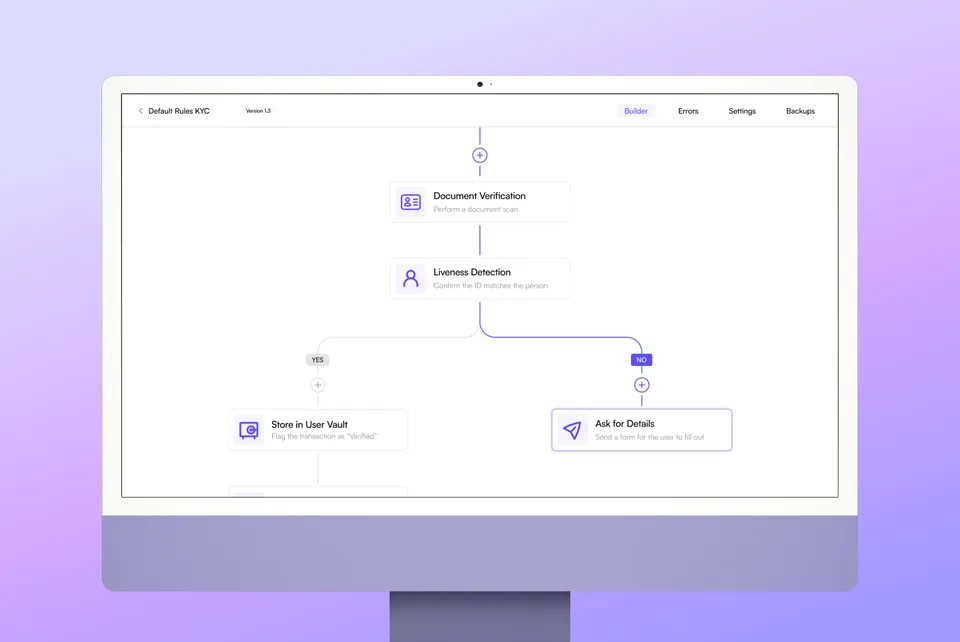
Verify that the provider uses zero-knowledge proofs (ZKPs) or secure multi-party computation. The infrastructure must ensure that personal identifiable information (PII) never touches your servers. Look for solutions that keep data off your liability list while maintaining a "golden copy" of the client record across the network, as described in recent industry audits.
Ensure the protocol supports the specific regulatory requirements of your target markets, such as GDPR or MiCA. The system should allow for automated data retention policies and right-to-be-forgotten requests without breaking the integrity of the verification ledger. Providers that offer explicit compliance modules reduce the legal overhead significantly.
Assess the API maturity and developer documentation. A robust SDK should allow you to embed verification flows directly into your onboarding process with minimal friction. Prioritize providers that offer pre-built connectors for major blockchain networks and traditional banking systems to speed up deployment.
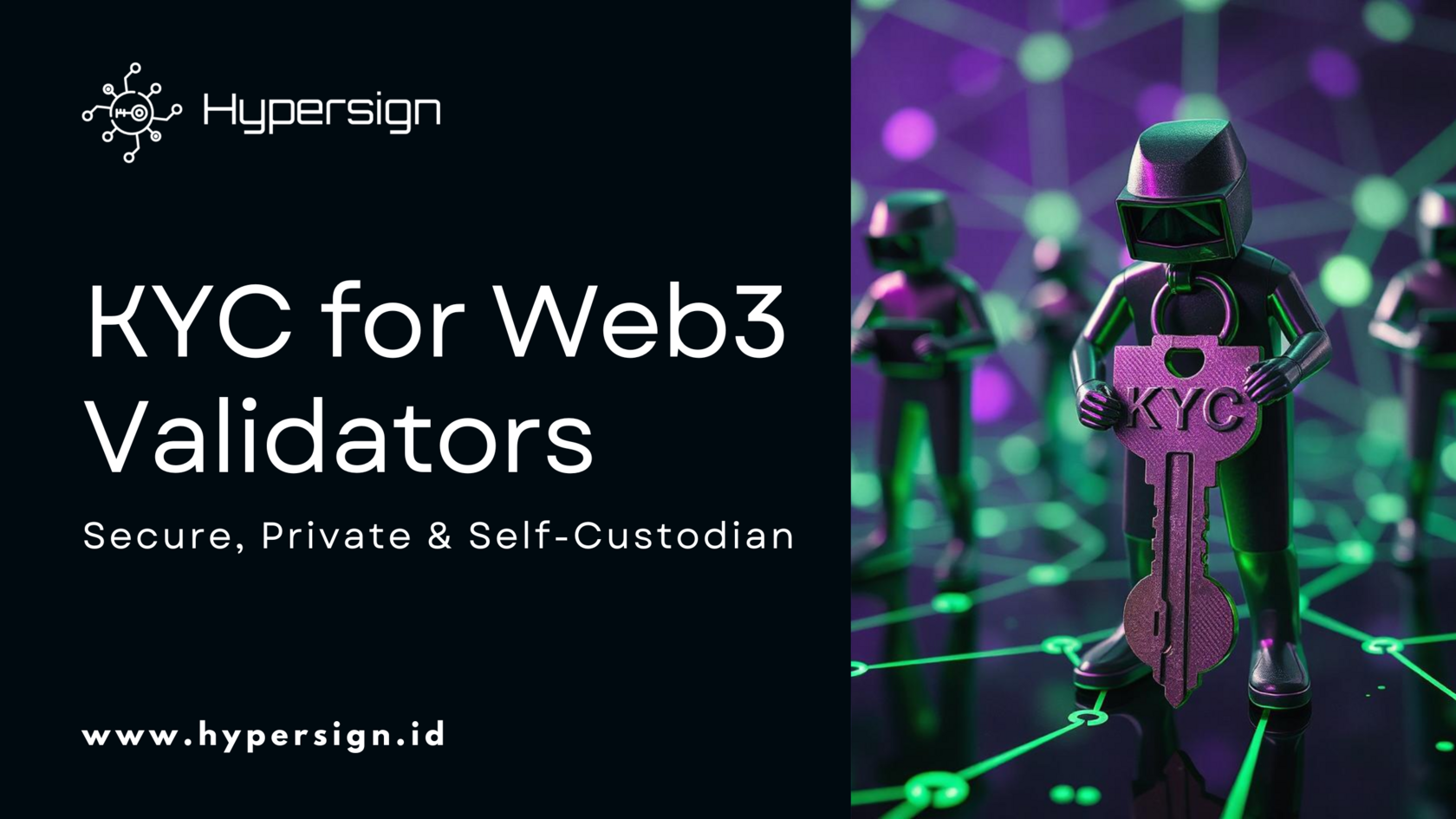
Review the provider’s partner network and supported identity issuers. Leading KYC companies like Sumsub, Veriff, and Trulioo are increasingly integrating decentralized protocols. Choose a vendor that aggregates multiple identity providers, giving you flexibility to switch data sources based on cost, coverage, or user location.
Watch for these weak options
Decentralized KYC (dKYC) promises to shift data control back to users while maintaining compliance. While the architecture is sound, the market is crowded with solutions that promise more than they deliver. Before integrating a new vault, verify these three common pitfalls.
1. The "Zero-Knowledge" Mislabel
Many providers claim full zero-knowledge proof (ZKP) integration but actually rely on standard hashing. True ZKP allows verification without revealing underlying data. If a provider cannot explain their cryptographic proof system, they are likely just storing encrypted data, not enabling privacy-preserving verification. Check their technical documentation for ZKP specifics.
2. Vendor Lock-in via Proprietary Standards
Some dKYC platforms use closed-source protocols that prevent users from migrating their identity credentials. This creates a new form of centralization. Look for solutions built on open standards like W3C Verifiable Credentials. This ensures your users can move their identity data between different institutions without starting from scratch.
3. Ignoring the "Golden Record" Sync
Decentralized KYC is not just about storage; it is about synchronization. A robust system updates a client’s data across all participating institutions in real time. If the platform requires manual re-verification for every new partner, it fails the core promise of efficiency. Ensure the solution offers a unified "golden record" that stays current across the network.
Decentralized kyc vaults: what to check next
What is decentralized KYC?
Decentralized KYC shifts identity verification from centralized databases to user-controlled cryptographic vaults. Instead of institutions storing raw personally identifiable information (PII), the data remains off your servers and out of your liability list. This approach allows a single, golden copy of client data to sync across a network, ensuring records are always up-to-date while eradicating duplicates.
How do decentralized KYC vaults work?
These vaults function as privacy-preserving storage layers between the user and the verifier. When a user needs to prove their identity, they grant temporary access to specific data points via zero-knowledge proofs. This means verifiers can confirm compliance without ever seeing or storing the underlying sensitive documents, reducing the attack surface for data breaches.
What are the top KYC service providers in 2026?
Leading providers include GBG, Sumsub, Veriff, Trulioo, Entrust, Jumio, Socure, LexisNexis Risk Solutions, and AU10TIX. The best option depends on your global coverage needs, integration requirements, and workflow flexibility. For decentralized-specific infrastructure, platforms like Dock Labs and Zyphe offer specialized tools for managing decentralized identity credentials.
Is decentralized KYC compliant with regulations?
Yes, but it requires careful implementation. While it enhances privacy, it must still satisfy Anti-Money Laundering (AML) and Know Your Customer (KYC) mandates. The key is ensuring that the cryptographic verification process provides auditable evidence of identity without compromising the user's right to data minimization. Always consult legal counsel to align your vault strategy with local jurisdictional requirements.
No comments yet. Be the first to share your thoughts!