Decentralized KYC Vaults: Infrastructure and Strategy
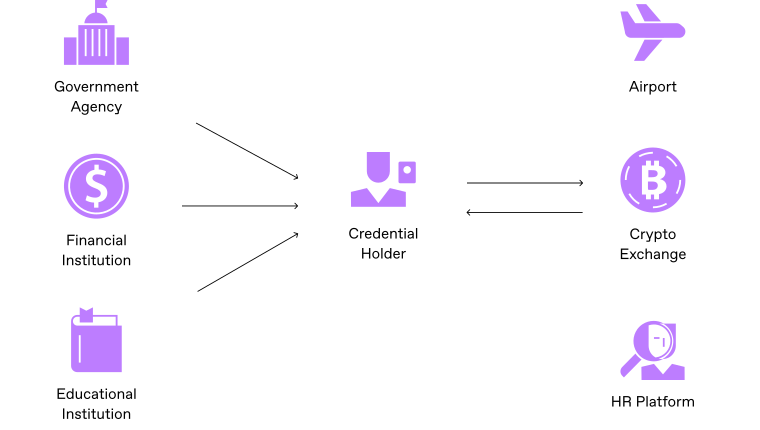
Decentralized KYC vaults shift personal identity data from centralized corporate databases into user-controlled storage. Instead of handing your passport and selfie to every exchange and platform, you verify once with an AI agent. That verification is then stored in a vault you own, allowing you to grant temporary access to institutions when needed.
This architecture eliminates the need for redundant data collection. Institutions sync with the vault to verify a single, golden copy of your client profile and associated natural persons. You retain the key, reducing the attack surface for massive data breaches while ensuring compliance with privacy regulations.
The infrastructure relies on a substrate that separates verification from storage. AI agents handle the initial identity checks, encrypting the results before they are written to the blockchain or distributed ledger. This ensures that sensitive Personally Identifiable Information (PII) is never exposed to the verifying party, only the proof of compliance.
Decentralized KYC Vaults: Choosing the Right Infrastructure
Use this section to make the Decentralized KYC Vaults decision easier to compare in real life, not just on paper. Start with the reader's actual constraint, then separate must-have requirements from details that are merely nice to have. A practical choice should survive normal use, maintenance, timing, and budget. If a recommendation only works in an ideal situation, call that out plainly and give the reader a fallback path.
| Factor | What to check | Why it matters |
|---|---|---|
| Fit | Match the option to the primary use case. | A good deal still fails if it does not fit the job. |
| Condition | Verify age, wear, and service history. | Hidden condition issues erase upfront savings. |
| Cost | Compare purchase price with likely upkeep. | The cheapest option is not always the lowest-cost option. |
Choose the next step
Decentralized KYC Vaults works best as a clear sequence: define the constraint, compare the realistic options, test the tradeoff, and choose the path with the fewest hidden costs. That order keeps the advice usable instead of decorative. After each step, pause long enough to check whether the recommendation still fits the reader's actual situation. If it depends on perfect timing, unusual access, or a best-case budget, include a simpler fallback.
Spotting Weak Decentralized KYC Options
Not all decentralized identity solutions deliver on their privacy promises. Many projects still rely on centralized databases for the very data they claim to decentralize, creating a false sense of security. When evaluating infrastructure, look for the actual vault architecture. If the provider holds the private keys or stores raw PII on a central server, the system is merely digitized KYC, not decentralized.
Check for zero-knowledge proof (ZKP) implementation. Weak options often use standard encryption without ZKPs, meaning the verifier must see the underlying data. True decentralized KYC allows verification of attributes (like age or residency) without revealing the raw documents. If the solution requires uploading full passport scans to a cloud bucket, it fails the privacy-first standard.
Another common mistake is ignoring the "single golden copy" principle. Some platforms sync data across multiple fragmented ledgers, increasing the attack surface. A robust system maintains one immutable, user-owned record. Verify that the protocol allows users to revoke access instantly. Without granular, real-time revocation, a compromised credential remains valid indefinitely, defeating the purpose of decentralized identity.
Finally, assess the interoperability of the credentials. Isolated vaults that only work with one specific provider create new silos. Strong infrastructure supports W3C Verifiable Credentials standards, allowing seamless verification across different institutions. Without this, you are just swapping one vendor lock-in for another.
No comments yet. Be the first to share your thoughts!