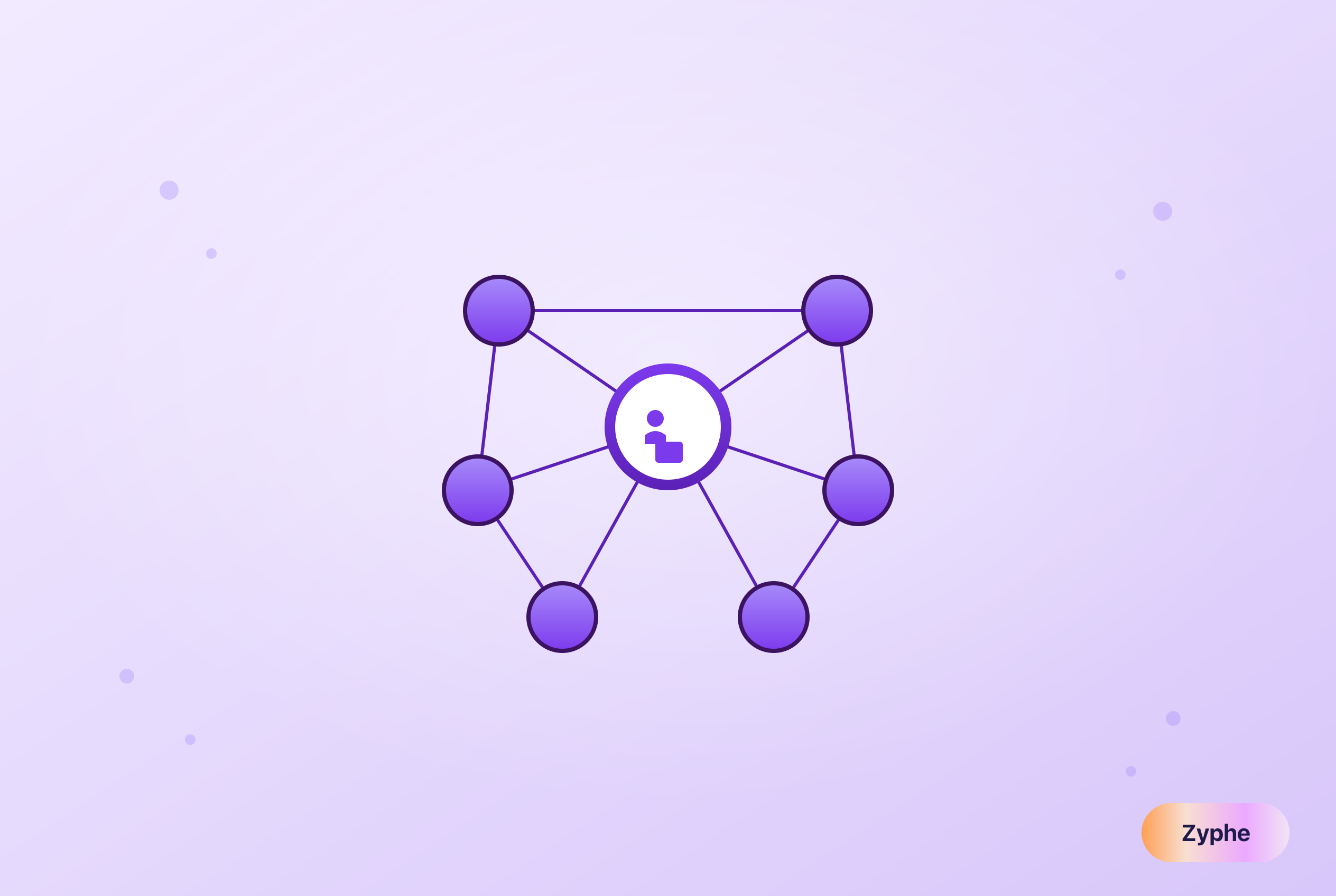
Why centralized identity storage fails
Traditional KYC models rely on a "honeypot" architecture, where financial institutions and verification providers store massive, centralized databases of sensitive personal information. This centralization creates a single point of failure that is increasingly attractive to malicious actors. When a centralized vault is breached, the consequences are not limited to a single company; they cascade across the entire ecosystem, exposing millions of users to identity theft, fraud, and regulatory penalties.
The risk is not theoretical. Recent industry data highlights the fragility of this model. For instance, reports from 2026 indicate significant breaches involving major verification platforms like IDmerit and Sumsub. These incidents demonstrate that even industry leaders with substantial security budgets are vulnerable to sophisticated attacks when they concentrate sensitive data in one location. The resulting loss of trust and financial liability underscores the urgent need for a more resilient approach.
Decentralized KYC Vaults offer a structural alternative by shifting control back to the user. Instead of storing raw documents in a central server, this architecture uses zero-knowledge proofs and user-controlled credentials to verify identity while keeping the underlying data private. This method eliminates the honeypot risk, ensuring that a breach at one node does not compromise the entire network. As regulatory scrutiny increases, understanding this architectural shift is critical for any organization serious about long-term compliance and user privacy.
How decentralized kyc vaults work
A decentralized KYC vault shifts the custody of identity data from a central server to the user. Instead of uploading a passport or driver’s license to a third-party database, you hold a decentralized KYC vault that stores your verified credentials. This architecture relies on verifiable credentials (VCs) issued by trusted authorities and zero-knowledge proofs (ZKPs) to verify information without exposing the raw data.
The issuer creates the credential
The process begins with an identity issuer, such as a government agency or a certified KYC provider. When you submit your documents, the issuer verifies your identity against their records. Once confirmed, they sign a digital credential. This credential is not a copy of your ID; it is a cryptographically signed statement confirming specific attributes, such as "over 18" or "resident of the EU." Think of this as a trusted seal on a sealed envelope that only you can hold.
The user stores the data
You receive this credential and store it in your digital wallet or vault. This is the core of the decentralized model. Your data never touches the verifier’s server until you choose to share it. You control the private keys, meaning you decide which data points to disclose and for how long. This eliminates the risk of a central database breach exposing millions of users’ sensitive information simultaneously.
The verifier checks the proof
When a service needs to verify your identity, you request a proof. A zero-knowledge proof allows you to demonstrate that you meet certain criteria without revealing the actual data. For example, you can prove you are over 21 without showing your birthdate or full name. The verifier checks the cryptographic signature of the issuer and the validity of the proof. If both check out, the verification succeeds, and no raw personal data is transmitted.
Why this matters for compliance
This flow ensures that only the minimum necessary data is shared, aligning with privacy-by-design principles. It reduces liability for businesses and protects user privacy. By keeping the vault user-controlled, you maintain sovereignty over your digital identity while still meeting regulatory requirements.


As an Amazon Associate, we may earn from qualifying purchases.
Building a compliant Web3 infrastructure
Decentralized KYC vaults allow platforms to meet strict AML and KYC mandates without becoming the primary target for data breaches. Instead of storing sensitive identity documents in a centralized database, the vault acts as a cryptographic gatekeeper. It verifies credentials once and issues a signed token confirming the user’s status. This architecture shifts the burden of data storage away from the platform and onto the user’s device or a private, encrypted vault.
The regulatory landscape for digital assets remains fragmented, with requirements varying significantly by jurisdiction. Platforms must ensure their verification flows satisfy local authorities, such as the FinCEN in the United States or the FCA in the UK, while maintaining the privacy promises of Web3. A centralized KYC provider often holds the "golden record" of user data, creating a single point of failure. If that provider is breached, the entire platform’s user base is exposed. Decentralized vaults mitigate this by ensuring the platform only receives a "yes" or "no" verification result, never the underlying PII (Personally Identifiable Information).
To understand the operational differences, it helps to compare the traditional centralized model with the decentralized vault approach. The table below outlines the key distinctions in data ownership, breach risk, and compliance overhead.
| Feature | Traditional KYC | Decentralized Vaults |
|---|---|---|
| Data Storage | Platform holds raw PII | User holds data; vault holds proofs |
| Breach Risk | High (single point of failure) | Low (no central PII database) |
| Compliance Overhead | High (GDPR/CCPA liability) | Moderate (audit trails only) |
| User Privacy | Low (data shared with platform) | High (zero-knowledge verification) |
Implementing this strategy requires careful integration with licensed VASP (Virtual Asset Service Provider) frameworks. The goal is to create a seamless onboarding experience that feels private to the user but satisfies the rigorous demands of financial regulators. By adopting a decentralized vault, platforms can demonstrate a proactive commitment to data minimization, a core principle in modern privacy regulations.
Implementing ZK-proof verification
Zero-knowledge proofs (ZKPs) are the cryptographic engine that makes decentralized KYC vaults viable. They allow a user to prove they meet specific compliance criteria—such as being over 18 or passing a sanctions screen—without revealing the underlying personal data. This shifts the paradigm from sharing documents to sharing cryptographic receipts.
The architecture typically involves three parties: the identity issuer (e.g., a government or bank), the identity holder (the user), and the verifier (the platform). When a user initiates a KYC check, their vault generates a ZK-proof. This proof attests to the validity of their credentials without exposing the raw data to the verifier. As noted in research on privacy-preserving systems like ZKVault, this model effectively decouples identity verification from data exposure.
1. Establishing the cryptographic circuit
The foundation of any ZK-proof system is the circuit—a mathematical program that defines the rules for verification. For KYC, the circuit encodes the compliance logic: "If the user's age > 18 AND the user is not on the OFAC list, then output TRUE." This circuit is compiled into a format that can be executed efficiently by zero-knowledge libraries like Circom or Halo2. The circuit must be trusted and transparent, often undergoing formal verification to ensure no loopholes exist that could allow false proofs.
2. Proving with private data
Once the circuit is set, the user interacts with their decentralized KYC vault. The vault holds the user's private credentials, such as a digital passport or ID. Using a proving key, the vault computes a proof that the private data satisfies the circuit's constraints. This step happens locally or in a trusted execution environment (TEE) to ensure the user's data never leaves their control in plaintext. The output is a compact cryptographic proof, which is much smaller than the original data.
3. Verifying on-chain or off-chain
The verifier receives the proof and uses a verification key to check its validity. This can happen on-chain (within a smart contract) or off-chain (by a backend service). On-chain verification is more transparent and trustless but can be computationally expensive. Off-chain verification is faster and cheaper but relies on the verifier's honesty. Many systems use a hybrid approach: the proof is verified off-chain, and a signature or hash is recorded on-chain to ensure auditability.
4. Managing proof expiration and revocation
Compliance is not a one-time event. KYC credentials expire, and sanctions lists change. A robust ZK-proof system must handle proof freshness and revocation. This often involves using a Merkle tree of valid credentials or a revocation list. The user must generate a new proof periodically, incorporating the latest status of their identity. This ensures that the proof remains valid and that revoked identities cannot reuse old proofs to bypass checks.
5. Integrating with Web3 onboarding
Finally, the verified proof must be integrated into the user's onboarding flow. The platform checks the proof against the circuit. If valid, the user is granted access to specific features or tokens. This process is seamless for the user, who only needs to approve the proof generation. The result is a privacy-preserving compliance check that aligns with regulatory requirements while respecting user data rights.
Common kyc verification: what to check next
Users often worry about sharing personal data in a decentralized environment. A Decentralized KYC Vaults guide helps clarify how these systems work, ensuring you understand the safety and legitimacy of the process before you begin.
Is know your customer legit?
Yes. KYC is a standard regulatory requirement for financial institutions to prevent money laundering and fraud. In the context of a Decentralized KYC Vaults guide, this means your identity is verified by a trusted third party but stored in a way that protects your privacy, rather than being held by a central exchange.
Is KYC verification safe?
Verification is safe when it uses decentralized identity protocols. Instead of uploading documents to a central server, you submit them to a secure vault. The vault issues a zero-knowledge proof, confirming you are who you say you are without revealing the underlying data to the platform you are using.
What is blockchain KYC?
Blockchain KYC integrates identity verification with distributed ledger technology. It allows for immutable record-keeping of verification status. This reduces duplication of effort across platforms, as a verified status in one Decentralized KYC Vaults guide context can often be reused elsewhere without re-submitting documents.
How do I complete KYC for crypto?
Completing KYC typically involves selecting a provider, scanning your government ID, and taking a selfie for liveness detection. In a decentralized model, this data is encrypted and stored in your personal vault. You then share a cryptographic proof of your verified status with the service that requires it.
No comments yet. Be the first to share your thoughts!