Defining decentralized KYC infrastructure
Decentralized KYC vaults function as a privacy-preserving storage layer that sits between the user and the verifier. Instead of institutions holding raw personal data in centralized databases, users retain control over their credentials. This shift moves the responsibility of data management from the service provider to the individual, fundamentally altering how identity verification is conducted in digital finance.
The architecture ensures that when a user needs to prove their identity, they do not send their entire history to a new institution. Instead, they share only the specific, verified claims necessary for compliance. This prevents the creation of duplicate records across different platforms and guarantees a single, "golden copy" of the client’s data. As noted by Intellect.eu, this synchronization ensures data remains up-to-date while eradicating duplicates across the network.
This infrastructure is critical for high-stakes regulatory environments. By decoupling data storage from data verification, organizations can comply with strict privacy laws like GDPR without maintaining massive, vulnerable databases. The verifier receives a cryptographically signed proof of identity rather than the raw documents themselves, maintaining confidentiality while satisfying due diligence requirements.
Compare legacy KYC vs. decentralized KYC solutions
The KYC market is shifting from centralized data silos to decentralized identity (DID) models. Traditional providers like GBG, Sumsub, and Veriff aggregate data into proprietary databases. In contrast, decentralized KYC vaults store credentials in self-sovereign wallets, allowing users to own and share their data selectively.
This structural difference impacts cost, privacy, and compliance. Legacy systems often require redundant verification for each new institution, increasing friction and operational costs. Decentralized vaults enable a single verification to be reused across platforms, reducing friction while maintaining regulatory compliance through zero-knowledge proofs or selective disclosure.
The table below contrasts the core operational differences between these two approaches:
| Feature | Legacy KYC | Decentralized KYC |
|---|---|---|
| Data Ownership | Provider-owned silos | User-owned wallets |
| Verification Cost | High (per-onboarding) | Lower (shared verification) |
| Privacy Model | Full data exposure to provider | Selective disclosure/ZKPs |
| Data Freshness | Stale until manual update | Real-time sync via vault |
| Compliance Audit | Provider-dependent | Cryptographic proof of validity |
Legacy providers like Entrust and Jumio remain dominant due to established integrations and regulatory familiarity. However, the shift toward decentralized identity is driven by the need for data minimization and user control. Institutions adopting decentralized KYC vaults are moving away from storing raw PII (Personally Identifiable Information) and toward verifying cryptographic proofs of identity attributes.
This transition requires a different infrastructure stack. Instead of maintaining large-scale databases, institutions now interact with decentralized identity protocols and verifiable credential issuers. The result is a more efficient, privacy-preserving onboarding process that aligns with emerging data protection regulations.
How the vault stores and verifies data
Decentralized KYC vaults function as privacy-preserving storage layers that sit between the user and the verifier. Instead of sending raw personal identification information (PII) to every institution, users store their credentials in a secure, user-controlled vault. This architecture eliminates the need for redundant data collection and reduces the risk of large-scale data breaches.
The verification process relies on two core technologies: Decentralized Identifiers (DIDs) and Zero-Knowledge Proofs (ZKPs). DIDs provide a standardized way to represent identities on the blockchain without relying on a central authority. They allow users to own and control their digital identity, linking it to verifiable credentials issued by trusted sources.
Zero-Knowledge Proofs enable the vault to prove that specific criteria are met without revealing the underlying data. For example, a user can prove they are over 18 without disclosing their exact birthdate or government ID number. This mathematical proof confirms compliance with regulatory requirements while keeping sensitive personal details hidden from the verifier. The system ensures that only the necessary information is shared, maintaining privacy and security.
This approach shifts the control of identity data back to the individual. Users decide which credentials to share, with whom, and for how long. This decentralized model not only enhances privacy but also streamlines the onboarding process for financial institutions and other regulated entities.
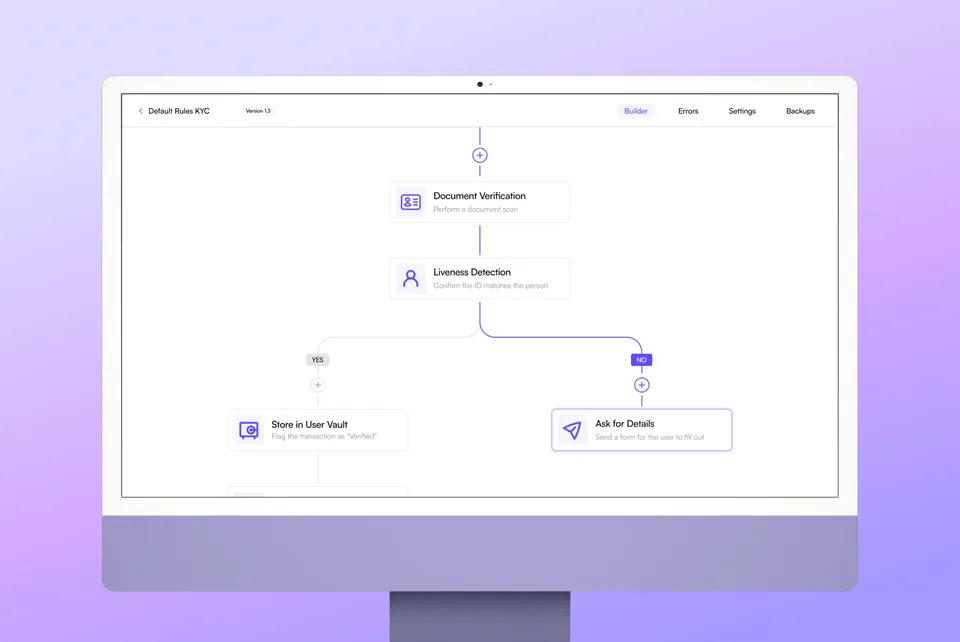
Navigating US and EU Compliance
Decentralized KYC Vaults must bridge the gap between permissionless infrastructure and rigid regulatory frameworks. In the United States, FinCEN treats crypto service providers as Money Services Businesses (MSBs), requiring strict adherence to the Bank Secrecy Act. This means every vault operator must implement robust Anti-Money Laundering (AML) protocols, including transaction monitoring and Suspicious Activity Report (SAR) filings. Failure to align with FinCEN guidelines can result in severe penalties, effectively shutting down operations.
The European Union presents a different but equally stringent landscape under the Markets in Crypto-Assets (MiCA) regulation. MiCA mandates that crypto-asset service providers (CASPs) maintain comprehensive records of transaction origins and beneficiaries. Decentralized KYC Vaults address this by creating a "golden copy" of client data that syncs across institutions. This ensures that when a client updates their identity information once, every participating entity in the network receives the verified update, eliminating data silos and duplicate records.
To meet these dual requirements, vaults must implement a three-step compliance workflow:
Users submit biometric and document data to a trusted verifier. The vault receives a zero-knowledge proof confirming identity status without exposing raw personal data, satisfying both US privacy expectations and EU data minimization principles.
The system screens verified identities against global sanctions lists (OFAC, EU Consolidated List). If a user matches a high-risk profile, the vault automatically restricts access or flags transactions for manual review, ensuring proactive AML compliance.
The vault continuously monitors for changes in regulatory status or source of funds. Any update is propagated to all linked institutions via the decentralized network, ensuring that compliance records remain current and audit-ready without redundant user input.
Implementing this structure allows your Decentralized KYC Vaults guide to serve as a practical blueprint for regulated markets. By prioritizing data integrity and automated screening, operators can satisfy FinCEN and MiCA requirements while maintaining the efficiency advantages of decentralized architecture.
Charting the decentralized KYC vaults market
The infrastructure supporting decentralized KYC vaults is still maturing, so we look to broader crypto identity tokens to gauge market sentiment. These tokens often serve as the underlying substrate for identity verification networks, making their price action a useful proxy for institutional and developer interest in privacy-preserving compliance.
We track these assets using provider-backed charts to ensure accuracy. The volume and trend lines help us distinguish between speculative noise and genuine adoption signals in the decentralized identity space.
No comments yet. Be the first to share your thoughts!