What Decentralized KYC Vaults Actually Are
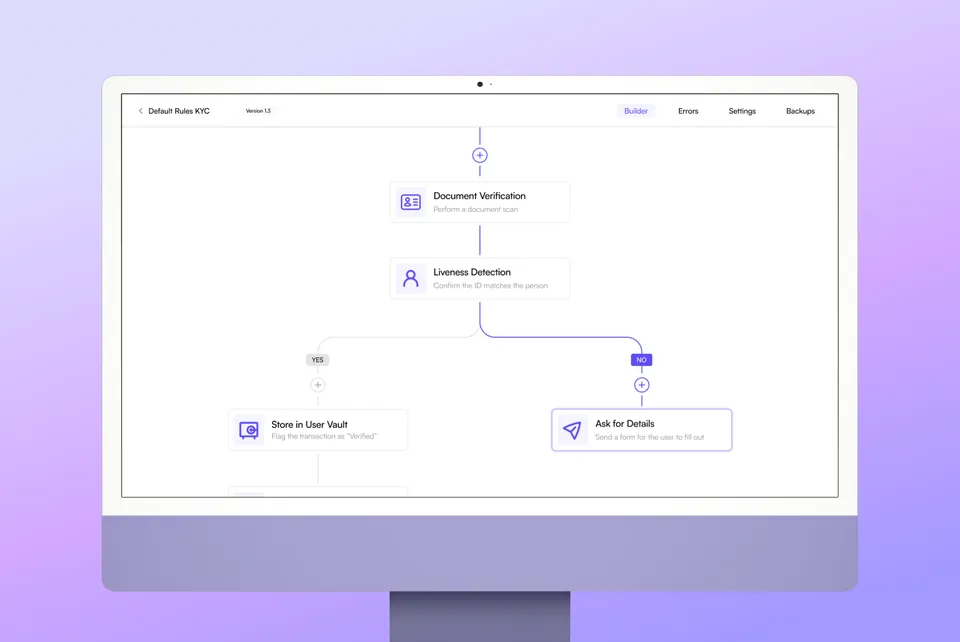
Decentralized KYC vaults function as privacy-preserving storage layers that sit between the user and the verifier. Instead of sending raw identity documents to every new platform, users store credentials in a secure, user-controlled vault. Verifiers then request specific proofs—like "over 18" or "verified identity"—without ever seeing the underlying data.
This architecture shifts ownership from institutions to individuals. As noted by Zyphe, decentralized KYC verifies users with AI agents on a substrate where customers own their credentials. Users can reuse these verified identities across platforms, eliminating the need to repeatedly submit the same documents. You never have to worry about a third-party data breach exposing your passport or license.
The primary constraint today is adoption friction. While the infrastructure is robust, not all onboarding flows support verifiable credentials. Before building a solution, you must verify which verifier networks your target users actually trust and use. Without network effects, a vault is just a digital wallet with extra steps.
Tradeoffs in decentralized KYC vaults
Decentralized KYC vaults function as privacy-preserving storage layers that sit between the user and the verifier. Instead of sending raw documents to every platform, users store credentials in a vault and grant temporary, encrypted access. This architecture shifts control back to the individual, but it introduces new engineering and compliance challenges that require careful evaluation.
When selecting a vault infrastructure, you must balance security, regulatory alignment, and operational complexity. The following comparison highlights the primary tradeoffs between different architectural approaches.
| Factor | Centralized Vault | Distributed Ledger | Hybrid Model |
|---|---|---|---|
| Data Sovereignty | Provider controls storage | User controls keys | User keys, provider nodes |
| Regulatory Clarity | High (GDPR/CCPA) | Low (Right to be Forgotten) | Medium (Selective disclosure) |
| Verification Speed | Fast (Direct API) | Slow (Consensus overhead) | Moderate (Cached proofs) |
| Cost Structure | Per-transaction fees | Gas/Network fees | Hybrid subscription |
| Interoperability | Low (Walled garden) | High (Open standards) | Medium (API gateways) |
Centralized vaults offer the highest regulatory clarity and speed, making them suitable for institutions requiring strict audit trails. However, they reintroduce the single point of failure that decentralized models aim to solve. Users must trust the provider not to misuse or leak their data, which contradicts the core promise of self-sovereign identity.
Distributed ledgers provide maximum sovereignty and interoperability through open standards. Yet, they struggle with performance and compliance, particularly regarding data deletion rights. The latency of consensus mechanisms can slow down user onboarding, creating friction in high-volume environments.
Hybrid models attempt to bridge this gap by combining user-controlled keys with provider-managed nodes. While this offers a middle ground, it requires complex cryptographic protocols to ensure that no single party can reconstruct the full user profile without consent. This complexity increases development costs and potential attack surfaces.
Choose the next step
Decentralized KYC Vaults works best as a clear sequence: define the constraint, compare the realistic options, test the tradeoff, and choose the path with the fewest hidden costs. That order keeps the advice usable instead of decorative. After each step, pause long enough to check whether the recommendation still fits the reader's actual situation. If it depends on perfect timing, unusual access, or a best-case budget, include a simpler fallback.
Spotting Weak Options in Decentralized KYC
Decentralized KYC vaults promise privacy by keeping raw data with the user while allowing verifiers to check credentials. This architecture shifts control from centralized databases to the individual. However, the market is full of vendors making vague promises. You need to separate real infrastructure from marketing noise.
Many platforms claim to be "decentralized" while still holding your private keys or storing data on centralized servers. This is a critical failure. If the provider can access your identity documents, they are just a traditional data broker with a blockchain wrapper. True decentralized KYC means you hold the key to your vault. Without this, you face the same data breach risks as legacy systems.
Another common mistake is ignoring interoperability. A vault that only works with one specific verifier is useless. You need a system that supports standard verifiable credentials (VCs) so you can reuse your identity across different platforms. If you have to upload your documents every time you sign up for a new service, the system has failed its core purpose.
Finally, check the verification logic. Some solutions use opaque AI agents that make decisions without audit trails. This creates compliance nightmares for regulated industries. You need transparent, deterministic verification rules that comply with local regulations. Without this, you cannot prove compliance during an audit.
Decentralized kyc vaults: practical: what to check next
Before committing to a decentralized infrastructure, teams need to understand the operational trade-offs. The following answers address common objections regarding data control, vendor selection, and regulatory compliance.
No comments yet. Be the first to share your thoughts!