Decentralized kyc vaults: the infrastructure limits to account for
Decentralized KYC vaults represent a structural shift in how identity data is managed, moving personal information from centralized company databases into user-owned storage. This architecture pairs AI verification agents with a substrate that eliminates the need to store raw Personally Identifiable Information (PII) on centralized servers. Instead, the vault acts as a secure container, allowing institutions to verify credentials without holding the underlying data.
The primary constraint lies in the operational complexity of maintaining this "golden copy" of client data across distributed systems. Institutions must sync documents and verify natural persons in real-time while ensuring the vault remains compliant with evolving regulatory standards. This requires a robust infrastructure that can handle cryptographic proofs and zero-knowledge verifications without introducing latency that hinders user onboarding.
For market participants, the constraint is also economic and technical. Building a vault system requires significant upfront investment in secure key management and interoperable standards. However, the tradeoff is clear: by shifting liability away from centralized databases, projects reduce their exposure to massive data breaches. The challenge is not just building the vault, but ensuring it integrates seamlessly with existing compliance workflows used by banks and exchanges.
Decentralized kyc vault choices that change the plan
Decentralized KYC vaults shift credential storage from centralized databases to user-controlled wallets, but this architectural change introduces specific operational friction. You must weigh privacy benefits against implementation complexity and compliance verification costs.
The core tradeoff lies in data sovereignty versus verification efficiency. Centralized systems offer speed and ease of integration for onboarding teams but create single points of failure for data breaches. Vault-based systems prioritize user privacy by keeping Personally Identifiable Information (PII) off your servers, yet they require robust cryptographic infrastructure and user education to manage key custody effectively.
Compliance and Audit Readiness
Regulators require clear audit trails. While vaults hide raw data, they must still prove verification status without exposing underlying documents. This often requires zero-knowledge proofs or selective disclosure mechanisms, which add computational overhead and potential latency during high-volume onboarding events.
User Experience and Key Management
Vaults shift custody responsibility to the end-user. If a user loses their private keys, their verified identity credentials may become inaccessible, creating support burdens for your platform. Traditional centralized KYC retains control, ensuring recovery options exist, but at the cost of storing sensitive PII in high-value target databases.
Integration Complexity
Building a vault-based system requires integrating multiple blockchain nodes, smart contract auditors, and off-chain AI verification agents. This increases initial development time and ongoing maintenance costs compared to using a single SaaS provider. However, it reduces long-term liability associated with data breaches.
| Factor | Centralized KYC | Decentralized Vault | Primary Risk |
|---|---|---|---|
| Data Storage | Company servers | User wallet | Breach vs. Loss |
| Compliance Audit | Direct access | Cryptographic proof | Complexity vs. Privacy |
| User Control | Low | High | Responsibility vs. Sovereignty |
| Integration Cost | Low | High | Budget vs. Autonomy |
Choose the next step
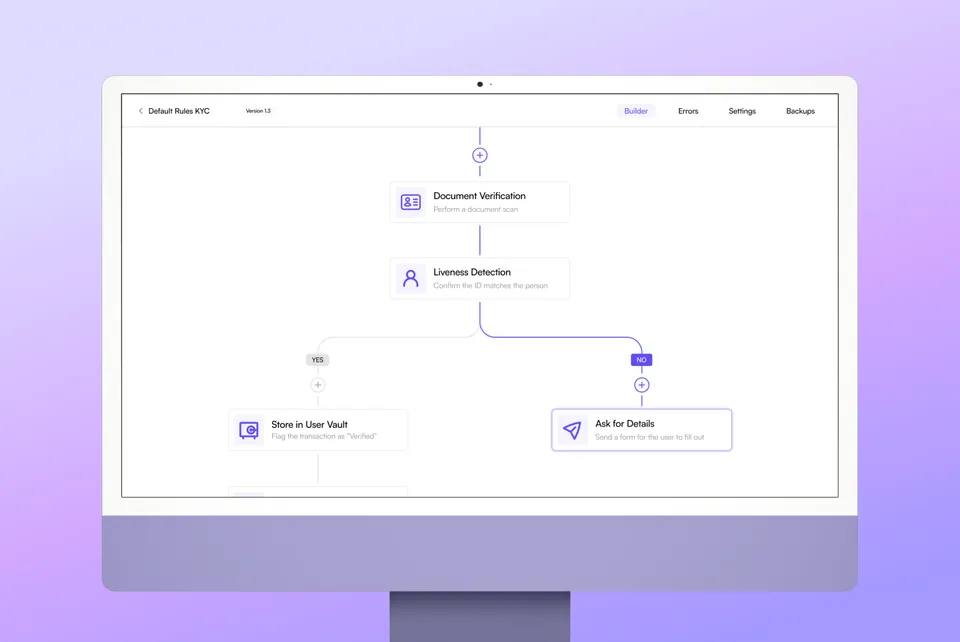
Decentralized KYC Vaults works best as a clear sequence: define the constraint, compare the realistic options, test the tradeoff, and choose the path with the fewest hidden costs. That order keeps the advice usable instead of decorative. After each step, pause long enough to check whether the recommendation still fits the reader's actual situation. If it depends on perfect timing, unusual access, or a best-case budget, include a simpler fallback.
Spotting Weak Decentralized KYC Options
Not all decentralized KYC vaults offer the same level of security or compliance. Some solutions rely on centralized backends despite marketing claims, creating single points of failure. Others lack robust cryptographic proofs, leaving user data vulnerable to replay attacks or unauthorized access. When evaluating providers, focus on the underlying infrastructure rather than the user interface.
Common Pitfalls to Avoid
Many platforms claim to be "decentralized" while actually storing personal identifiable information (PII) in traditional cloud databases. This defeats the purpose of user-owned credentials. Look for solutions that use zero-knowledge proofs (ZKPs) or secure enclaves to verify identity without exposing raw data. Additionally, ensure the vault supports standard verifiable credentials (VCs) to avoid vendor lock-in.
Another frequent mistake is ignoring regulatory alignment. A vault must integrate with existing compliance frameworks, such as FATF Travel Rule requirements. If the solution cannot generate audit trails for institutions, it will fail enterprise adoption. Check for official certifications or partnerships with established KYC providers like Jumio or Onfido to ensure reliability.
Verification Checklist
- Data Storage: Confirm PII is encrypted and stored off-chain or in user-controlled vaults.
- Cryptographic Proof: Verify the use of ZKPs or similar technologies for privacy-preserving verification.
- Interoperability: Ensure support for W3C Verifiable Credentials standards.
- Compliance: Check for integration with major regulatory bodies and audit trails.
By focusing on these technical and compliance aspects, you can avoid weak options and select a robust decentralized KYC solution.
Decentralized kyc vaults: frequently asked: what to check next
Users often face confusion when navigating the intersection of regulatory compliance and self-sovereign identity. These answers clarify how decentralized KYC works in practice, who provides the infrastructure, and when identity verification is actually required.
Who are the top 5 KYC providers?
The decentralized KYC landscape includes established identity platforms and specialized Web3 infrastructure. Leading providers include:
- Zyphe: Offers AI verification agents with user-owned vaults.
- Intellect EU: Provides blockchain-based KYC management for institutions.
- Socure: Specializes in AI-powered identity verification for crypto platforms.
- Entrust: Issues verifiable credentials for decentralized identity systems.
- Regula Forensics: Focuses on document verification and biometric analysis.
Is KYC mandatory for all crypto?
No. Centralized exchanges (CEXs) like Coinbase and Binance require KYC to comply with financial regulations. However, decentralized exchanges (DEXs) and non-custodial wallets typically do not require identity verification. You can trade tokens or hold assets without submitting personal documents on these platforms.
How to do KYC for crypto?
The process varies by platform type. For centralized exchanges, you must upload government ID and complete a selfie scan. For decentralized solutions, you use a verifiable credential (VC) from an authorized issuer. You store this credential in your wallet and share only the necessary proof with the service, rather than uploading raw documents.
Does crypto wallet require KYC?
Non-custodial wallets (e.g., MetaMask, Phantom) do not require KYC. You generate a private key and control your assets directly. Custodial wallets, where a third party holds your keys, often require KYC to comply with anti-money laundering (AML) laws. Always check the terms of service before choosing a wallet solution.
Helpful gear
Use these product recommendations as a starting point, then choose the size, material, and price point that fit how you actually use the gear.



As an Amazon Associate, we may earn from qualifying purchases.
No comments yet. Be the first to share your thoughts!