Decentralized KYC Vaults: How They Work
Decentralized KYC vaults shift personal data from company databases into user-owned storage. Instead of handing your passport or selfie to every exchange, you verify once with an AI agent and store the credential in your vault. This substrate eliminates the need for repeated PII collection, reducing your exposure to data breaches and central server failures.
The process follows a clear sequence. First, you submit documents to a trusted verifier. Second, the verifier issues a zero-knowledge proof or encrypted credential to your vault. Third, when a platform needs to check your identity, your vault shares only the necessary proof, not the raw data. The platform validates the proof against the verifier's signature without ever seeing your actual documents.
This model changes the risk profile for both users and platforms. Users retain ownership of their identity data, while platforms rely on cryptographic proofs rather than storing sensitive files. However, this approach requires robust infrastructure to ensure the vaults remain accessible and the proofs are verifiable across different jurisdictions. Without standardized protocols, the system can fragment, making cross-platform compliance difficult.
The tradeoff is complexity for privacy. While you avoid sharing your data repeatedly, you must manage your own keys and understand the verification standards accepted by the platforms you use. If a platform doesn't support your vault's format, you may need to re-verify through traditional means, defeating the purpose of decentralization.
Decentralized kyc vault choices that change the plan
Moving identity data from centralized servers to user-controlled vaults shifts liability but introduces new operational friction. You are trading off immediate convenience for long-term data sovereignty. The infrastructure behind these vaults determines whether the solution scales for enterprise compliance or remains a niche privacy tool.
To evaluate a vault provider, you must compare how they handle the three critical failure points: verification speed, regulatory auditability, and user retention. A vault that is too slow kills conversion rates; one that is too opaque fails compliance audits. The following comparison table breaks down the primary architectural differences you will encounter in the market.
| Feature | Centralized Database | Zero-Knowledge Vault | Self-Sovereign ID |
|---|---|---|---|
| Data Storage Location | Company servers | User device / encrypted vault | User-controlled wallet |
| Verification Latency | Low (seconds) | Medium (minutes) | High (user-dependent) |
| Regulatory Audit Trail | Full raw data access | Proof of compliance only | Selective disclosure |
| Breach Impact | Total PII exposure | Minimal (no raw PII) | Wallet compromise only |
| Implementation Cost | Low | High (complex integration) | Medium (wallet SDKs) |
The choice between these models depends on your risk tolerance and user base. Centralized databases offer the lowest friction but carry the highest regulatory and reputational risk. Zero-knowledge vaults reduce your liability by never holding raw personally identifiable information (PII), but they require more complex integration with AI verification agents. Self-sovereign identity solutions place the most control in the user’s hands, often resulting in higher drop-off rates during onboarding.
When selecting a provider, look for those that explicitly document their cryptographic standards and audit logs. Avoid solutions that claim "full privacy" while simultaneously requiring unrestricted data access for basic compliance checks. The most robust systems balance selective disclosure with clear, immutable audit trails that satisfy regulators without exposing the underlying user data.
How to build a decentralized KYC vault
Decentralized KYC vaults shift personal data from company databases into user-owned storage, eliminating the need to repeatedly share PII with every platform. This architecture pairs AI verification agents with a substrate that allows users to prove compliance without exposing raw documents. Below is the practical decision framework for implementing this infrastructure.
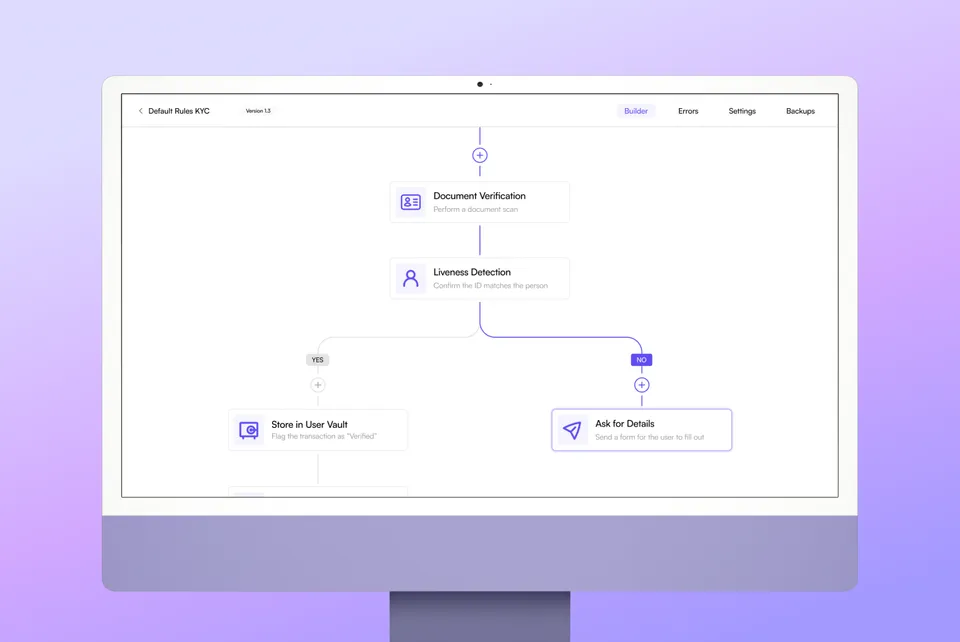
Start by mapping which identity attributes are strictly necessary for regulatory compliance. Avoid over-collecting data to reduce liability. Determine if the vault needs to support Know Your Customer (KYC) checks, Anti-Money Laundering (AML) screening, or both. Define the exact proof points required, such as age verification or residency, before selecting the underlying protocol.
Choose a standard that supports zero-knowledge proofs (ZKPs) to verify claims without revealing underlying data. Look for protocols like W3C Verifiable Credentials or DIDs (Decentralized Identifiers) that allow users to hold their credentials in a digital wallet. Ensure the protocol is compatible with your target blockchain ecosystem and can handle the specific AI verification agents you plan to deploy.
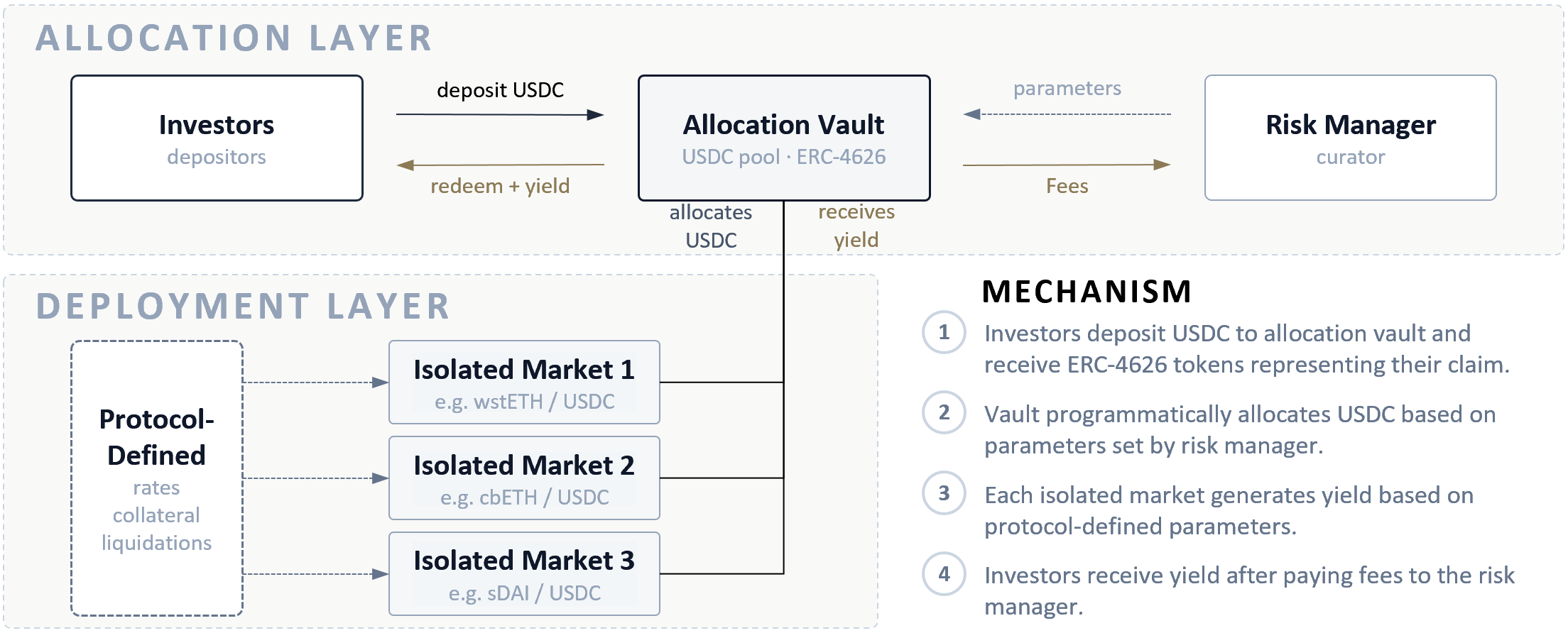
Deploy AI agents to process the initial identity checks against official databases or biometric data. These agents should interact with the vault to validate credentials without storing the raw input. The system must be designed to generate a cryptographically signed proof of verification that the user can present to third-party platforms on demand.
Configure the backend to store sensitive documents in encrypted, user-controlled storage solutions like IPFS or decentralized cloud services. The user retains the private keys to access this data. Your platform only receives the zero-knowledge proof or a hashed token confirming validity, ensuring that even if your infrastructure is breached, no PII is exposed.
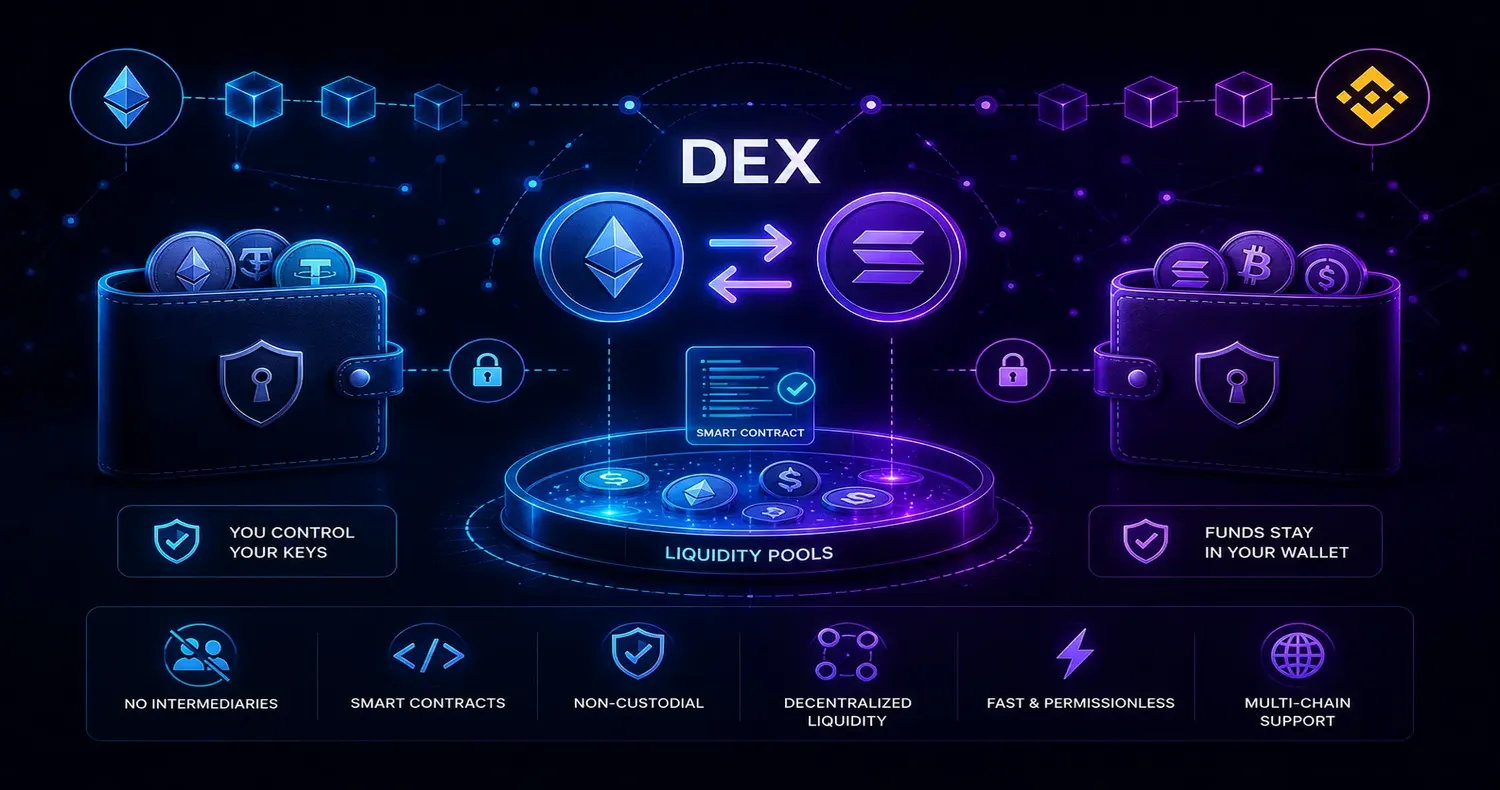
Build a smart contract module that allows external platforms to verify the user’s compliance status. This module should validate the signature from your AI agent and the integrity of the zero-knowledge proof. Ensure the verification process is gas-efficient and supports batch processing for high-volume onboarding scenarios.
To validate your implementation, test the vault with a mock third-party platform. Ensure the user can generate a proof, and the recipient can verify it without accessing the underlying document. This end-to-end test confirms that privacy and compliance are both maintained.
Avoid the weak options
Use this section to make the Decentralized KYC Vaults decision easier to compare in real life, not just on paper. Start with the reader's actual constraint, then separate must-have requirements from details that are merely nice to have. A practical choice should survive normal use, maintenance, timing, and budget. If a recommendation only works in an ideal situation, call that out plainly and give the reader a fallback path.
The simplest way to use this section is to write down the must-have criteria first, then compare each option against those criteria before weighing nice-to-have features.
Decentralized kyc vaults: practical: what to check next
Before integrating decentralized identity solutions, it helps to understand how these vaults actually function in a compliance context. The model shifts data custody from centralized exchanges to the user, but it still must satisfy regulatory requirements like AML and FATF travel rules.
No comments yet. Be the first to share your thoughts!